

In the glass-walled offices of Silicon Valley, the future of artificial intelligence is discussed with a religious fervor. The promise of generative models that can reason, code and create is treated as the ultimate win for American soft and hard power. Yet, with the arrival of 2026, a decidedly 19th-century constraint has emerged to dampen this digital optimism. The high-performance chips that drive the AI revolution require staggering amounts of electricity, but the American power grid is increasingly unable to provide it.
The scale of the problem is becoming impossible to ignore. Data centers in the United States are projected to consume nearly 8 percent of total electricity demand by 2030, with some analysts forecasting a spike to 12 percent as AI-optimized servers proliferate. In Northern Virginia, the global capital of data processing, the strain is already palpable. As the tech giants race to build “Gigawatt-scale AI factories” — facilities that consume as much power as a mid-size city — they are discovering that the primary bottleneck is no longer the availability of specialized GPUs or engineering talent. It is the availability of a stable power-line connection.
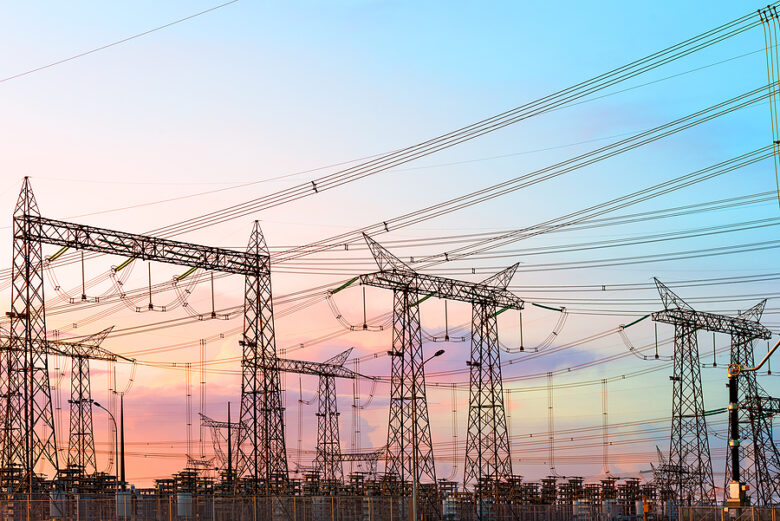
At the heart of this crisis is a humble piece of hardware that few outside the utility industry ever considered until now: the electrical transformer. These devices are essential for stepping down high-voltage grid power to the levels required by computers. Yet, the United States has largely lost the ability to produce them at scale. Lead times for large power transformers have ballooned from a few weeks to nearly four years.
This scarcity is a symptom of a broader industrial hollow-out. For decades, the American manufacturing base for specialized electrical steel and transformer assembly withered as the market favored cheaper imports. Today, the U.S. relies on foreign manufacturers for 80 percent of its large power transformers. When global supply chains tighten, or when domestic demand surges as it has with the AI boom, the American grid finds itself at the back of a very long queue.
The fragility of the system was laid bare by the 2021 winter storms in Texas, where an unregulated market and neglected infrastructure led to catastrophic failure and loss of life. While that event was triggered by extreme weather, the underlying issues — aging equipment and a lack of spare capacity — remain unresolved. It is a profound irony that a nation with undisputed nuclear hegemony and the world’s leading technology industry possesses a power grid that, in parts, resembles those of developing nations. Seventy percent of U.S. transmission lines are more than 25 years old, nearing the end of their intended lifespans.
This physical reality has sparked a “Nuclear Renaissance” by necessity. So far, we have seen the unprecedented: tech giants are now “resurrecting” decommissioned nuclear reactors. Microsoft’s deal to restart Three Mile Island and Google’s partnership to revive Iowa’s Duane Arnold plant are no longer outliers; they are the new standard for securing the 24/7 carbon-free “baseload” power that wind and solar cannot yet provide at this scale.
The federal response has finally reached a state of alarm. In January 2025, an executive order declared a National Energy Emergency, invoking the Defense Production Act and eminent domain to bypass the permitting backlogs that have stalled transmission lines for a decade. The Department of Energy has launched the “Genesis Mission” to merge the nation’s supercomputing power with its energy research, specifically targeting the deployment of Small Modular Reactors to power data centers. These moves signal a recognition that the AI race is not just a software competition; it is a battle of infrastructure.
Goldman Sachs and other analysts have warned that the United States could lose its lead in AI to China, not because of a lack of innovation but because of a “power crunch.” While American utilities struggle with supply shortages, China has been aggressively building its grid capacity with a massive network of ultra-high-voltage lines. Beijing’s ability to coordinate long-term infrastructure planning with industrial needs provides a strategic advantage that the fragmented American grid cannot match.
The crisis forces a difficult conversation about the American economic model. For years, the focus was on the “weightless” economy of software and services. The physical world of copper, steel and high-voltage cables was treated as a solved problem. The AI boom has shattered that illusion. A single 1-gigawatt data center campus consumes enough energy to power 750,000 homes. Building such facilities without a corresponding expansion of the grid is a recipe for systemic failure.
To maintain its technological edge, the United States must treat its power grid with the same strategic urgency it applies to semiconductor manufacturing. This means not only streamlining the permitting process for new transmission lines but also rebuilding a domestic supply chain for critical components such as transformers. Relying on a four-year waiting list for the basic building blocks of electricity is not a viable strategy for a global superpower.
The lesson of 2025 is that the digital future remains tethered to the physical past. The most sophisticated neural network in the world is useless without the power to run the servers. If the United States cannot solve its electricity problem, the “AI revolution” may find itself stalled by the very infrastructure it was supposed to transcend. Stability is no longer a given; it must be engineered.