

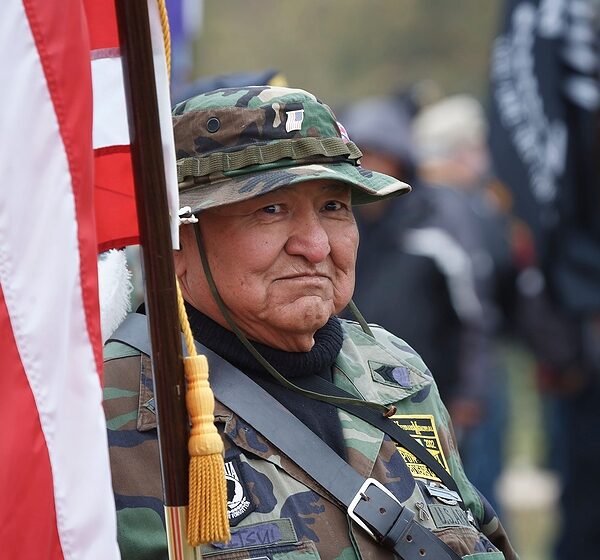
The story of Native American and Alaska Native veteran health care is akin to all rural veteran health care in the United States: longer distances, bigger challenges, and scarcer resources. COVID-19 has lifted the veil on the vulnerabilities of our healthcare system for our Native veterans, but those weaknesses have been known for many years. We are failing in our sacred trust.
Although a small percentage of the U.S. population, Native Americans serve in the military at higher rates than any other demographic. Before 9/11, the 2015 American Community Survey reports Native Americans and Alaska Natives served at 19.9 percent per capita, versus 13.3 percent for other veterans.
Our history of genocide and oppression toward Indigenous citizens has not deterred this group from joining our nation’s military. Native Americans have fought in every major U.S. conflict even though they were not granted citizenship until 1924.
Legacy health issues that plague the Native American communities also affect the veterans of that community. Diabetes, alcoholism, heart disease, poverty, lack of access to health care, and food insecurity compound a tenuous healthcare outlook.
The conditions that sentence many Native Americans and Alaska Natives to a life of poor health manifest themselves in the veteran population, particularly in remote and rural areas. Geographical dispersion and distance are immense obstacles to care for Native American and Alaska Native veterans nationwide.
Native American veterans living on reservations outside the Phoenix metro area have up to a four-hour drive between them and the Phoenix Hayden Veterans’ Administration Medical Center. The story is the same in New Mexico, where the Albuquerque Murphy Veterans’ Administration Medical Center is more than three hours from Shiprock, on the Navajo Nation.
In addition, waiting for new patients to see a doctor in non-emergency situations can range from 30 to 65 days. Current patients can wait 30 to 45 days.
And let us not overlook that many Native Americans distrust the healthcare system due to past tragedies. Those include the forced sterilization of more than 3,000 Native American women in the 1970s by the Indian Health Service. And they have the common systemic experience of individual and cultural discrimination.
With those realities in mind, there are three major areas where continued progress and investment can yield better healthcare outcomes.
—Veterans Affairs can continue its partnership with the Indian Health Service to reach and care for veterans in Native American communities. A continued focus on technology and access particularly can create faster and more direct means of care and should be expanded.
—Greater investments have been made in telehealth by the VA and should be replicated in tribal communities for veterans. The VA recently opened two telehealth access sites in Montana at Montana State University in Bozeman and the University of Montana in Missoula.
Greater telehealth options will allow those seeking mental health care for veteran-specific issues, such as post-traumatic stress disorder, to use the VA. They can see doctors who can treat their service-related issues with cultural understanding and patient-related expertise.
—The VA and IHS need to continue to educate tribal leaders, tribal healthcare administrative professionals, and tribal Native veteran organizations about veteran healthcare benefits and how to access them at the organizational and individual levels.
The VA can do this nationwide through funding created by the PACT Act. That legislation, passed in 2022, expands VA healthcare and benefits for veterans exposed to burn pits, Agent Orange and other toxic substances. The VA should spend extra time hiring Native American and Alaska Native outreach specialists to engage Native American veterans directly to educate them on the benefits of joining the VA healthcare system.
The challenges in supporting our Native American and Alaska Native veterans in healthcare can seem almost insurmountable. But we can fulfill our promise to all our veterans, including our tribal brothers and sisters who stood next to us on the battlefield. We can do that through greater partnership between the VA and IHS, a commitment to community-based care, an investment in innovation through telehealth, and a monumental drive to engage and educate Native American and Alaska Native communities.
We must continue to stand by them together.