
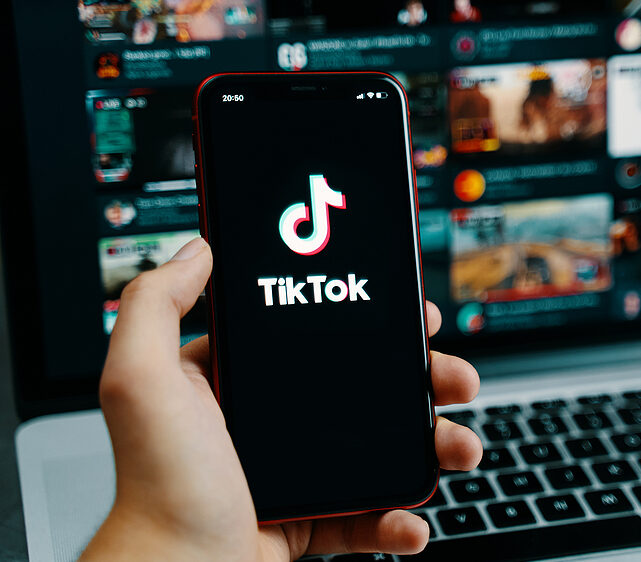
Universal Music Group has pulled some of the world’s most popular artists, including Taylor Swift, from TikTok with the expiration of their last licensing agreement, and in the process, breaking millions of videos that have now lost their soundtracks. TikTok says 30 percent of music content on their site will come down, and some industry estimates are as high as 80 percent.
This dramatic action has turned a business dispute into a major cultural event. The standoff is essentially the age-old money fight about royalty rates. TikTok pays a fraction of typical royalties to songwriters and artists. It asserts that it offers compensation as “a free promotional and discovery vehicle” — the classic excuse behind using and monetizing other people’s work without paying them.
However, the dispute is also about something new — artificial intelligence technology, which has the ability to create music that can directly compete with human musicians, songwriters and performers.
Universal put it this way:
“On AI, TikTok is allowing the platform to be flooded with AI-generated recordings — as well as developing tools to enable, promote and encourage AI music creation on the platform itself — and then demanding a contractual right which would allow this content to massively dilute the royalty pool for human artists, in a move that is nothing short of sponsoring artist replacement by AI.”
There are already viable tools to have AI generate any song or the voice of any artist — without permission — and AI tools can compose new songs “in the style of” specified artists, using their work as training material without permission or compensation.
TikTok’s senior executives appear to understand the central role music plays in the platform’s popularity. They proudly state publicly that “music is at the heart of the TikTok experience” — and the Universal analysis confirms that the majority of content on TikTok contains music, more than any other major social platform.
Indeed, TikTok’s meteoric rise and global dominance have been fueled mainly by American music, a fact its leadership can’t deny. The platform’s 2021 Music Report begins with the admission that music is central to the TikTok experience.
If Universal can use the leverage of its current blackout to secure a new licensing deal that protects artists from competition with AI-generated music, it could become a template for a voluntary market solution to the issue. If Universal and TikTok can strike an agreement that covers the use of AI in a way that the platform and creators can live with artistically and financially, it could pave the way to resolving these thorny issues across the economy.
In fact, this could be the second major contract negotiation to tackle AI issues successfully, building on the resolution of the recent Hollywood strikes. The Alliance of Motion Picture Television Producers, representing films and television studios, recently concluded negotiations with the Writers Guild and SAG-AFTRA, representing performers, that include historic protections regarding AI.
If Universal and TikTok fail to come to an agreement, that would give dangerous fodder to proponents of heavy-handed government intervention, who would argue that the market has failed and that we should turn to politicians and bureaucrats to impose regulations as contemplated by President Biden’s sweeping executive order and ham-fisted legislative efforts led by Sen. Chuck Schumer.
So this is genuinely a high-stakes moment with huge potential upside and downside.
TikTok wants to profit from human-created music-centric content with below-market compensation to creators — and possibly zero compensation to creators displaced by AI. They probably thought their size and influence would keep them from paying any price, but Universal, a titan itself, is putting that to the test. And hanging in the wings are political vultures with their own agendas.
Under these circumstances, Universal’s stand against TikTok is commendable; it’s a rallying cry for everyone who represents creators to take similar action to assert their interests in market negotiations. By standing up to TikTok, Universal may inspire a broader movement to protect the rights and fair compensation of artists and creators. They should stay the course.