
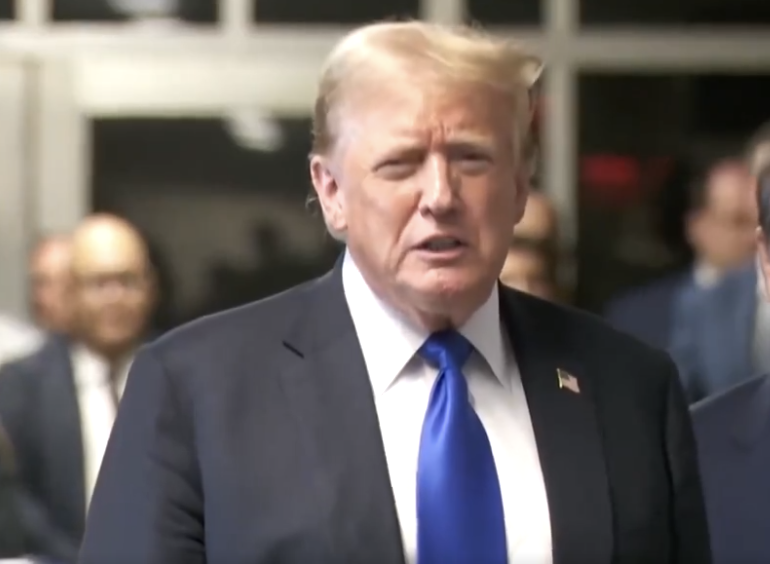
Donald Trump has been found guilty of 34 felonies for masterminding a conspiracy to alter the 2016 presidential election.
Many Americans don’t realize how serious this is. In 2016, the United States incarcerated 3.2 million citizens, the largest by far in the world. Its jails, prisons and post-incarceration restrictions are harsh and demeaning. Punishment, not rehabilitation, is its focus.
Jail and prison are not the total picture of a criminal conviction. It is much more. If Trump is treated like other felons, his humbling and out-of-his-control experience will begin even before his sentencing, slated for mid-September before Manhattan Supreme Court Judge Juan Merchan.
Like all convicted of felonies, Trump must meet with the probation department to discuss his life history and thoughts about the case. The report is then forwarded to the presiding judge, who takes it into account when determining the sentence. This might seem a minor inconvenience for Trump, but it is another mandatory time-consuming step in the criminal system. Next comes the sentencing.
Many experts have downplayed the potential for Trump to enter a prison. They underestimate the possibility, citing his level E felony status, the lowest of all such crimes. While few first-time level E felons go to prison, the most severe in nature do. Trump’s case is severe — 34 felonies and 10 violations of the gag order by the end of the trial.
Critically important is that two of Trump’s accomplices have already gone to prison for their parts in this conspiracy — his former lawyer, Michael Cohen, and his longtime chief financial officer, Alan Weiselberg. Neither had previous criminal records. Age is sometimes a factor in sentencing. Weiselberg is only one year younger than Trump.
Acceptance of responsibility and show of remorse are also critical considerations in sentencing. If Trump were asked if he took responsibility or felt any repentance, it is highly doubtful that he would answer affirmatively. Thus, like thousands of defendants before him, he will receive a harsher sentence.
Gag orders are taken very seriously in the judicial system, and Trump has already been found in contempt for violating them. His cavalier abuse of the orders, even after repeated warnings, is likely to influence his sentencing. His continued abuse and criticism of the judicial system post-trial may also come into play.
The fact that Trump’s accomplices were imprisoned, the seriousness of his fraud conviction, and his flagrant abuse of his gag orders make a strong case that the former president will spend time in jail or prison.
In New York state, felons sentenced to less than one year go to jail. Those with longer sentences go to prison. If Trump is sentenced to less than one year, he will likely be sent to Rikers Island. Officials at Rikers have already stated they can provide accommodations for a Trump imprisonment.
Trump will not experience the worst of our prison system, but he will have an experience unlike anything before in his elite and wealthy lifestyle. Even a less-than-austere confinement involves isolation, loneliness and the removal of all creature comforts, especially difficult for someone who has lived a pampered existence. His valet will not be there.
Assuming Trump is incarcerated, he will likely be placed on probation after release. Probation demands strict limitations and probation officers have great power over former inmates. Probationers are required to report regularly to their probation officer, who has the power to return them to jail for infractions. A common requirement, for example, is that those on probation refrain from contact with other felons. Studies vary, but in most states more than half of all ex-convicts are rearrested within three years and re-incarcerated. Trump could easily fall into this category.
Impulsive and angry outbursts are part of Trump’s personality style. These are dangerous characteristics once a person becomes a member of the criminally convicted. Infractions are not tolerated.
Many experts believe Trump will also be sentenced to community service. Cleaning streets, working in a food pantry, and other actions are typical. Given Trump’s ego and perception of his specialness, community service may be more stressful than time spent behind bars. Any requirement, even with the slightest hint of humiliation, would be a blow to Trump’s fragile ego.
Trump may be sentenced to jail or prison, given community service, and placed on probation. If that happens, his life will no longer be entirely his own.