

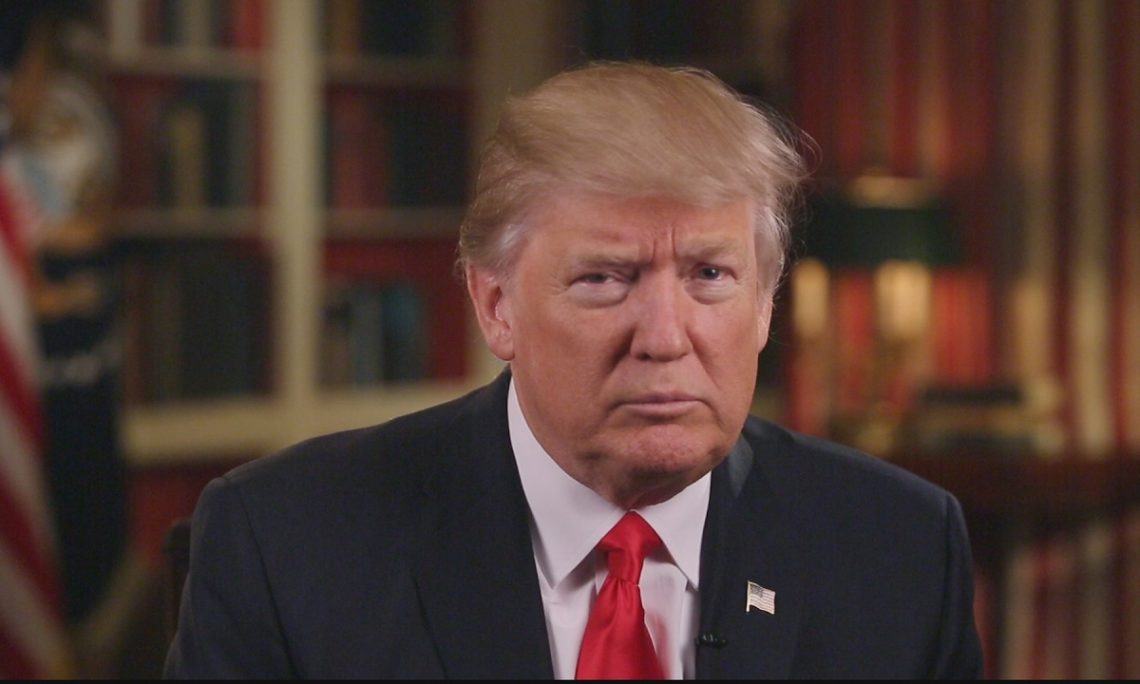
The killing of Charlie Kirk, Jimmy Kimmel’s recently revoked cancellation, and the organized targeting of “The View” point to a troubling shift in content moderation. Instead of safety, transparency and individual liberty, calls for moderation are aimed at censoring any language that challenges MAGA ideology.
This isn’t the Trump administration’s first foray into content moderation. President Trump previewed his digital censorship playbook with his “Woke AI” executive order. Built upon the conservative crusade against so-called “woke-ism,” the order frames itself as defending neutrality in AI. But it represents something more dangerous: government control over truth and information in the most transformative technology to date.
The executive order’s rhetoric conflates bias correction — the hard, necessary work of preventing AI from amplifying harmful stereotypes or producing false and dangerous misinformation — with “ideological meddling.” To illustrate the difference, consider two cases.
First, the AI-generated image of George Washington was depicted as Black, which many Republicans pointed to as an example of “woke” AI. No one actually believes George Washington was Black — look at every dollar bill ever printed. It is absurd to treat this as some grand act of historical revisionism. It’s a glitch that engineers could resolve quickly.
However, revisionist history has crept into American classrooms in an actual, harmful fashion. In Florida, history textbooks claimed enslaved people lived happily and were treated well. That is not harmless. It is a deliberate distortion of a dark chapter in American history. To treat these scenarios as equal threats flattens the line between silly AI misfires and the erosion of history.
To be clear, there are harms that can occur from biased AI. For example, Amazon’s early facial recognition system wrongly identified Black members of Congress as criminals. Misidentifications like this can lead to serious harm. Another notorious case involved hiring algorithms that discriminated against women, downgrading résumés if they included terms like “women’s chess club.” Without bias correction, AI replicates and magnifies existing inequities.
The Woke AI executive order erases this distinction. It treats the Hamilton-style “Washington as Black” moment as equivalent to life-altering misidentifications or gender-based discrimination. The result is a sweeping mandate to eradicate imagined wokeism. It is a ridiculous overcorrection.
The executive order undermines the principles of free expression that conservatives claim to champion. It is a textbook authoritarian tactic: claim your viewpoints are under siege, then use the power of the state to silence dissent. Moreover, practically speaking, the executive order is either unworkable symbolism or the administration’s first step toward digital authoritarianism.
In the best-case scenario, it functions as empty posturing, a threat that nonetheless discourages innovation. Startups self-censor to avoid crossing vague ideological lines. Researchers hesitate to publish findings that could be mischaracterized as “woke.”
In the worst-case scenario, the executive order becomes a government purity test for AI systems. Companies could be required to submit models for ideological vetting, ensuring outputs never stray from MAGA orthodoxy.
This would mirror China’s approach, where the Communist Party dictates what constitutes truth. This was best exemplified by the embarrassment of DeepSeek’s first iteration, which initially provided an accurate historical accounting of the Tiananmen Square Massacre, only to be “updated” to generate an output stating it cannot discuss the event.
America needs rules for AI, but safety should be separated from politics. Preventing disinformation or discriminatory outputs is not about ideology. It is about preventing harm. Transparency and accountability mechanisms can ensure AI systems are safe without crossing into political censorship.
Republican lawmakers routinely worry about China embedding communist values in its AI models. They would be well served to critique the administration’s heavy-handed approach to influencing AI training at home. To become the standard bearers of AI, the United States must lead by example, exporting democratic principles of free expression, pluralism and transparency.
The Woke AI executive order cloaks authoritarian control in the language of neutrality. It risks chilling free speech, stifling innovation and undermining America’s democratic leadership. Far from deregulation, it is state-managed truth, and it sets a dangerous precedent in the age of AI.
At a time when authoritarian regimes are weaponizing technology to cement control, the United States should not be imitating their playbook. The path forward is clear: reject government overreach disguised as neutrality and embrace genuine free expression in the age of AI. Anything less betrays both principles of liberty and America’s promise of free speech.