

Unlike the entertainment industry, professional tennis has managed to stay refreshingly above the political fray. Because of this, I have remained a fan for more than two decades. But at the first Grand Slam of the year — the Australian Open, which ended Sunday — several left-leaning reporters sought to infect the sport with their ideological agenda.
Legacy media reporters looking to stir up trouble in the press room goaded American players, particularly those with foreign-sounding last names. Instead of asking about their matches, journalists baited athletes to share their thoughts on “everything that’s been happening in the United States in the past year.” It was a thinly veiled invitation to trash Donald Trump in front of an international media audience.
The story spread far beyond the relatively small tennis community of players, coaches, and fans. Media outlets such as Yahoo Sports and OutKick ran pieces, while Fox News coverage stretched over several days, both on air and online via Fox Opinion.
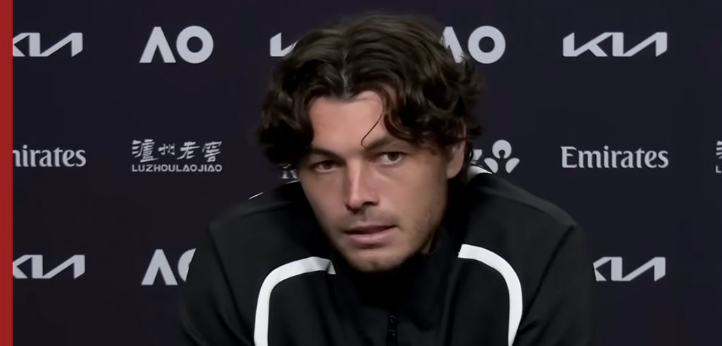
Most players were savvy enough not to step into the trap. Taylor Fritz, the incredibly hard-working and focused world No. 9, recognized the question for what it was: an attempt to drag him into left-wing politics and an unwelcome distraction.
“I feel like whatever I say here is going to get put into a headline and taken out of context,” Fritz said. “So I would really rather not do something that is going to cause a big distraction for me in the middle of the tournament.”
When asked how it felt to play “under the American flag right now,” 24-year-old Amanda Anisimova showed wisdom beyond her years, replying, “I was born in America, so I’m always proud to represent my country.”
Learner Tien, an up-and-coming American ranked No. 25, impressively played his way into the quarterfinals. But instead of being asked about his loss to Alexander Zverev, a reporter asked, “In the context of everything that’s been happening at the moment with Trump and ICE, what does your heritage mean to you, and how important are immigrants to American sport today?”
Smartly, the American replied, “Um, sorry, I don’t really want to talk about that right now.”
Sports are meant to inspire, not divide. Former South African President Nelson Mandela famously said, “Sport has the power to change the world. It has the power to inspire. It has the power to unite people in a way that little else does.”
Journalists once went in search of truth. If legacy media reporters were interested in tennis — or truth — or had taken the time to research the people they were interviewing, they might have recognized the genuinely inspiring stories standing right in front of them.
Take Amanda Anisimova.
On the professional tour since age 14, the New Jersey native is one of the most naturally gifted female players in the game. But despite an aggressive baseline game, a world-class backhand, and an explosive serve, she spent years languishing between Nos. 30 and 78 in the rankings.
Her matches were, frankly, difficult to watch. Nearly paralyzing performance anxiety led to missed returns, double faults, and frequent on-court sobbing. It became clear Anisimova was battling two opponents: the player across the net and her own inner demons.
In 2023, Anisimova stepped away from the sport to focus on her mental health. Critics warned it would be professional suicide, arguing that an eight-month absence would make a return to the top nearly impossible. Instead, time spent painting, reading, and reconnecting with friends and family paid off. After returning to the tour in January 2024, Anisimova won two 1000-level titles, reached Grand Slam finals at Wimbledon and the U.S. Open, and climbed back into the world’s top four.
Finding balance and engaging her whole self allowed Anisimova to give tennis her full focus. Honoring other aspects of her life ultimately strengthened her performance on the court.
Success in professional tennis is about mastering focus — on fitness, strategy, and execution. It requires immense mental discipline as well as physical effort. That is why players invest heavily in assembling the right team. Coaches, fitness trainers, nutritionists, and mental performance specialists all help athletes block out distractions and concentrate solely on their game.
Tennis may be an individual sport, but representing one’s country — not just at the Olympics — is always on an athlete’s mind. Bringing home a trophy inspires younger players and fans like me to reach higher, both individually and as Americans. Too many members of the legacy media were looking for athletes to help them use sports to divide rather than unite, and to denigrate America. Most tennis players, however, were simply too savvy to fall for such cheap provocation.