

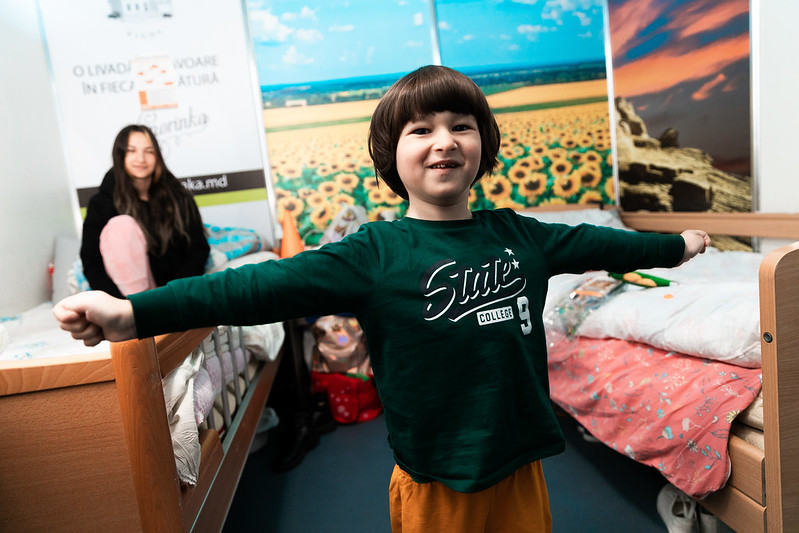
When conflicts arise, the realities of war unfold in real-time. As the Russia-Ukraine war enters its third year, one of those realities is the millions of refugees who face staggering trauma for themselves and their families.
Take 6-year-old Kira. She and her mother, Iryna, haven’t been able to return home since Russia bombed their town in 2022. They are staying in a refugee camp, waiting for life to return to normal while they cope with the horrors they have endured.
According to the United Nations, more than 108 million people worldwide were forcibly displaced from their homes in 2022, and 11 million Ukrainians are now scattered worldwide. These men, women and children suffer severe mental health effects from little sleep, post-traumatic stress disorder, and the feeling of helplessness as they flee war-torn homes and communities. While governments and nongovernment organizations are doing what they can to address this need, helping these desperate people with the individualized, tailored attention they require is overwhelming.
In a paper published by New Lines Institute, I ascribe to a process for supporting refugee psychological health that:
—Builds upon long-standing principles of positive mental health, such as providing care in the “golden hours” period to enhance short-term recovery and long-term health.
—Incorporates cultural awareness to create openness among refugees for sharing important personal stories and to tailor solutions where possible.
—Empowers refugees using the “name it to tame it” strategy that allows people to identify their specific emotions, understand the emotion and why it exists, and then focus on specific approaches to “tame” the emotion.
—Gives refugees tactics that calm their senses and bring them into the moment instead of dwelling on past trauma or fearing the future. This “toolbox” helps refugees navigate difficult moments in a psychologically healthy way, avoiding extremes like anxiety or disassociation.
This process starts with something that sounds counter-intuitive: active listening. Mental health professionals are not the experts on individuals’ traumatic experiences. Our job isn’t to tell people what to do. Our job is to have the right processes and protocols to help trauma survivors recognize they are the experts of their experiences and that they have internal strengths and capacities that will be brought to the surface through the right processes and protocols.
It is important for refugees that these principles help restore a sense of control in a world where everything feels outside their grasp. They aren’t expensive or complicated and can be provided to refugees quickly. They can also easily be learned, which means that as refugees’ needs — from security and safety to food and shelter — change from acute to long-term, they can take these skills with them wherever they end up and under whatever circumstances they are living.
Despite the overwhelming scope of refugee mental health needs, there is hope. I recently met with Iryna to discuss how she and her team can teach skills like those in the toolbox in group settings. While each refugee’s experience, traumas and strengths are different, helping them understand the skills empowers them to apply each one as needed. Some strategies and tactics encompass more than one step at a time. Something as simple as sugar-free gum provides support to multiple senses — opening the gum requires using the hands, the smell may be calming, chewing slowly incorporates taste as well as mindfulness, etc.
With the second anniversary of Russia’s invasion, many of us in the West have long admired the resilience and tenacity of the Ukrainian people in beating back their enemy. But what kind of country will they return to? Little Kira, Iryna and their compatriots need help rebuilding their lives and healing mental traumas. Now is the time to prepare.