

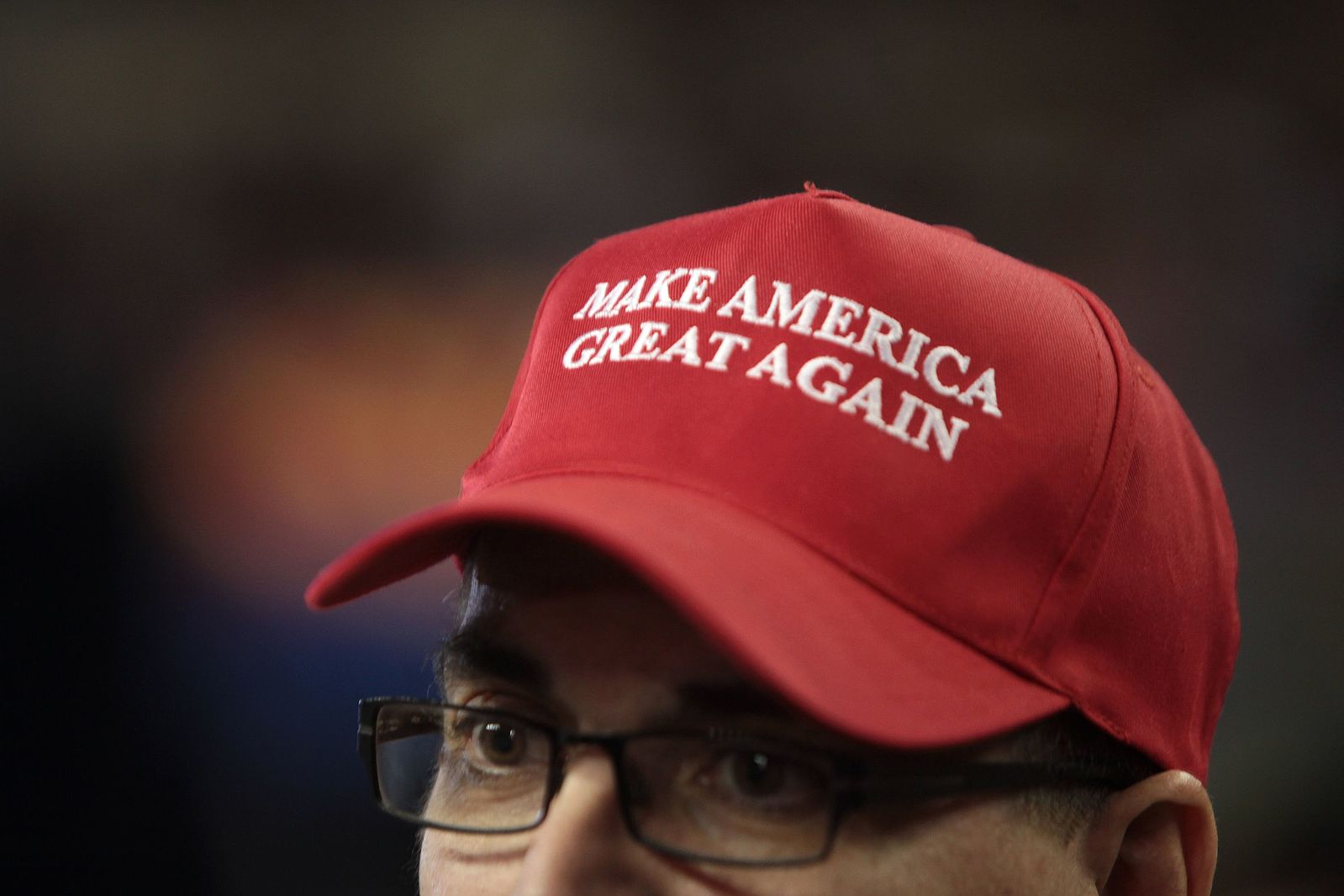
As the question swirls, is the MAGA movement dying or merely shapeshifting? It is tempting to treat the debate as exclusively domestic. That is to miss half the story. Whether MAGA declines or endures, its foreign-policy legacy is already reverberating across capitals from Brussels to Beijing.
With Donald Trump’s second entry into the Oval Office, MAGA transformed overnight from insurgent political rhetoric into the operative architecture of American policy-making. This reality makes the question not whether MAGA survives, but how deeply its practices will reshape global diplomacy.
Even before this second inauguration, MAGA-style populism had struck U.S. foreign policy as a form of political trauma. Its critics judged Trump’s blunt nationalism and transactional instincts as irresponsible, immature and destabilizing. However, the underlying critique went deeper. It was about legitimacy: a populist who challenged the structures underpinning the post-World War II international order.
In response, certain quarters of the foreign-policy establishment began rallying around a “normalization” project: re-anchoring the United States in traditional alliances and restoring it as a reliable hegemon. That framing cast MAGA as a temporary rupture.
Treating populism purely as a glitch overlooks a far more consequential transformation. MAGA’s foreign-policy orientation has rarely been erratic; it has followed a coherent logic rooted in nationalism. The “America First” doctrine embodies a broader rejection of multilateralism.
Trump has repeatedly questioned core assumptions such as the relevance of NATO, the value of collective burdens, the logic of alliances as divestments of sovereignty. He has demanded that allies shoulder more of the military burden, and the response in mid-2025 suggests they are listening. At the 2025 NATO summit in The Hague, member states committed to ramping up defense and security-related spending to 5 percent of their GDP by 2035, a sharp increase from the long-held 2 percent defense benchmark.
Across geographies, Trump’s diplomacy remains deeply personalistic. He frequently bypasses bureaucracies and treats bilateral relations as relationships between individuals, from world leaders to business tycoons, rather than institutional engagements. That style, often referred to as “champion diplomacy,” has weakened intra-alliance coordination and signaled to adversaries that American commitments could shift dramatically with each new administration.
This is not merely a stylistic quirk. It has had long-term geopolitical effects. In Europe and North America, MAGA’s pressure on alliance structures has forced a reckoning: trans-Atlantic trust remains, but so does a growing awareness that U.S. support can no longer be taken for granted. Allies are now bolstering their capabilities, modernizing arsenals, and preparing contingency strategies not as backup but as independent pillars of security.
In Asia, especially in the Indo-Pacific, MAGA’s nationalist, transactional approach to diplomacy has fueled hedging strategies. Countries such as Australia, India, Japan and South Korea, once confident in long-term U.S. commitment, are now stress-testing every American promise, from extended deterrence to military cooperation frameworks. Even if a post-MAGA administration later restores rhetorical warmth, the perception of alliances as burdens rather than guarantees has already shifted strategic calculations.
This is not just a U.S. story. MAGA did not emerge in a vacuum. It is part of a larger wave of populism reshaping global governance. Recent scholarship on populist nationalism and global cooperation warns that the worldwide surge of such politics is weakening multilateral frameworks, recalibrating alliances and injecting volatility into the norms of international cooperation.
Looking forward, the evolution of MAGA-style populism might take several paths, each with profound global implications.
First, even if Trump recedes, his brand of populism could be inherited by others, either domestically or abroad, in a more disciplined or ideologically broader form. In that scenario, the underlying commitment to national interest over multilateralism could remain, continuing to shape foreign policy for years, especially in trade, security and alliance burden-sharing.
Second, foreign-policy elites may succeed in re-anchoring U.S. engagement in traditional alliances, but with a caveat: a reformed, more conditional version of multilateralism. In other words, not a full rollback to pre-populist norms but a recalibrated, transactional multilateralism, where cooperation remains but only when aligned with national interest.
Third, perhaps most consequentially, MAGA’s model could become embedded more deeply in global governance as other countries adopt similar leadership styles: populist nationalism, personalist leadership and transactional diplomacy. That would pose serious risks to international cooperation across areas such as climate change and collective security.
What matters now is not the fate of a U.S. political brand. It is whether the structural legacy of MAGA endures through policies, institutions, habits of governance and global alliances. If that worldview persists, the post-MAGA world may be less about retrenchment and more about reordering.