
The world is still processing the remarkable raid in Venezuela and its effect on the political front.
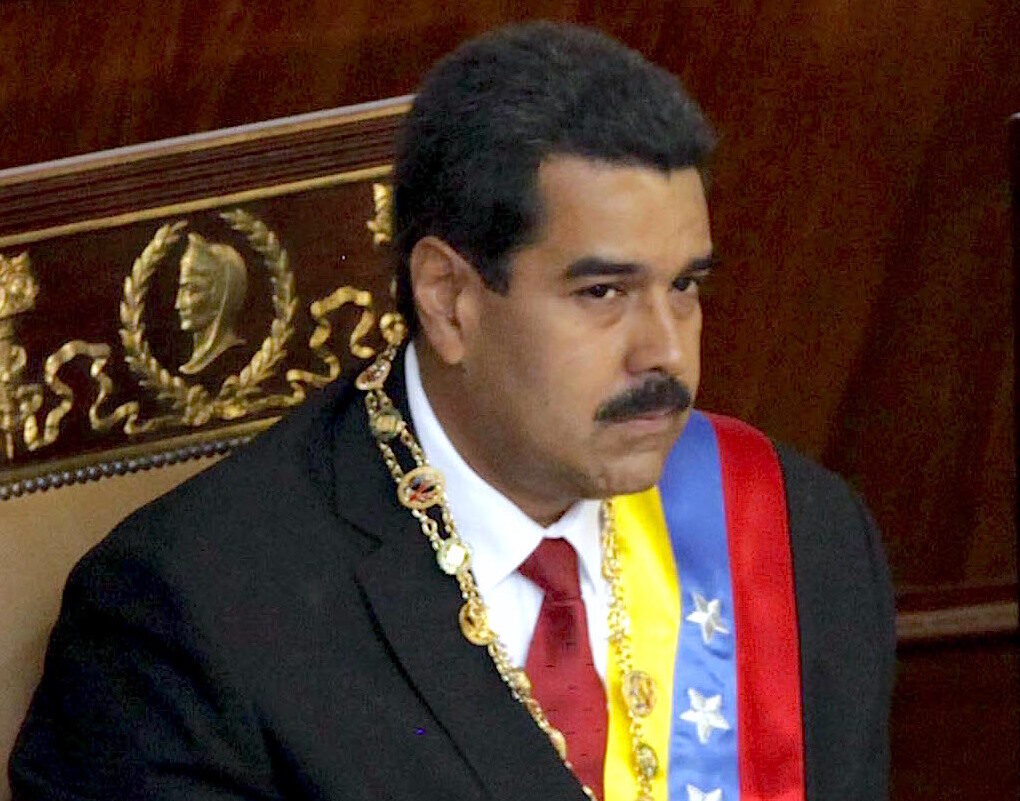
In a bold overnight mission, U.S. Special Operations Forces captured Venezuelan President Nicolás Maduro from his residence on January 3 and transported him to New York to face U.S. charges in a narco-terrorism conspiracy case.
Maduro — a left-wing authoritarian who ruled Venezuela for more than a decade while ignoring election results — was not just another foreign dictator. He presided over the transformation of a once-wealthy nation into a failed narco-state, exporting drugs laced with overdose-inducing fentanyl, migration instability, and criminal networks and gangs directly into the United States.
A Harvard-Harris poll in December makes it unmistakably clear where the American people stand on Venezuela. Public opinion was closer to 80-20 than a partisan split, driven by concerns about drugs, crime and national security.
Voters didn’t view Maduro as a legitimate democratic leader. Some 64 percent said he should be removed from office; 75 percent described his government as a dictatorship. When given fuller context — election fraud, narco-terrorism charges, the reward for capture, and the spillover of Venezuela’s collapse — support rose sharply:
—Eighty-five percent said Maduro should be removed.
—Among those, 76 percent said the United States should arrest him and bring him to the United States for trial.
Those numbers were collected when all of this was still theoretical.
Americans connect Venezuela directly to the drug crisis. Sixty-five percent think the government participates in the drug trade; 71 percent think it supports criminal cartels and illicit activities. That’s why voters back aggressive interdiction.
Sixty-seven percent support the U.S. destroying boats bringing drugs into the United States, with 63 percent saying those boats are appropriately targeted.
The takeaway is straightforward: Americans see Venezuela as a narco-state problem with real consequences at home, and they broadly support decisive action to deal with it.
This public instinct didn’t emerge in a vacuum. As someone who tracks public opinion over time, one of the most striking patterns in modern polling is what happened in July 2021. President Joe Biden’s job approval collapsed at precisely the same moment Afghanistan collapsed — and it never meaningfully recovered.
In our polling after the horrific Oct. 7, 2023, attacks in Israel, Americans said they think Russia’s invasion of Ukraine and the Oct. 7 attacks were direct consequences of that collapse in Afghanistan. In the public mind, weakness invited aggression.
What we’re seeing now — with the capture of Maduro and the strike on Iran’s nuclear program in Operation Midnight Hammer — is the Trump administration systematically repairing the damage to American power. Where the previous administration projected hesitation and disorder, this one projects clarity and resolve.
There’s a pattern here. One thing the Maduro situation and so many others suggest is that if you want to predict Donald Trump, he almost always chooses the strongest path — even when it’s not obvious at first glance.
This approach is not new. It’s old — very old.
The Monroe Doctrine, articulated in 1823, drew a clear line: the Western Hemisphere is off-limits to foreign powers. Initially aimed at keeping European empires out, it evolved into a broader strategic principle — this is our neighborhood, and hostile powers don’t get to set up shop here.
Fast forward to today, and the doctrine is relevant again, but the threats look different. It’s no longer European monarchies. It’s narco-states like Venezuela, backed by China and Russia, exporting drugs, instability and influence into the hemisphere. When the U.S. moves against Maduro, drug trafficking, or foreign military footholds in Latin America, that is the Monroe Doctrine updated for the 21st century: keep hostile powers and criminal regimes from poisoning our backyard.
Where past administrations spent years bogged down in distant conflicts, this administration operates in hours.
And the strategic effects ripple inward. The former border czar Kamala Harris famously said her job was to address the “root causes” of the migration crisis. After years of inaction, it took a new president to first close the border in a matter of weeks, and then actually confront a primary root cause: the collapse of Venezuela into a narco-terrorism state aligned with America’s greatest adversaries.
Since this administration began, the border has been shut, ICE has begun interdicting gang members, drug boats have been destroyed, and as a result, overdose deaths in the United States sharply dropped. Those aren’t abstractions. Those are real mothers and fathers not burying their children because fentanyl-laced drugs never made it into their communities.
For Americans, this isn’t about empire or interventionism. It’s about restoring order, protecting lives, and reasserting the simple idea that American power, when used decisively and intelligently, still matters.