

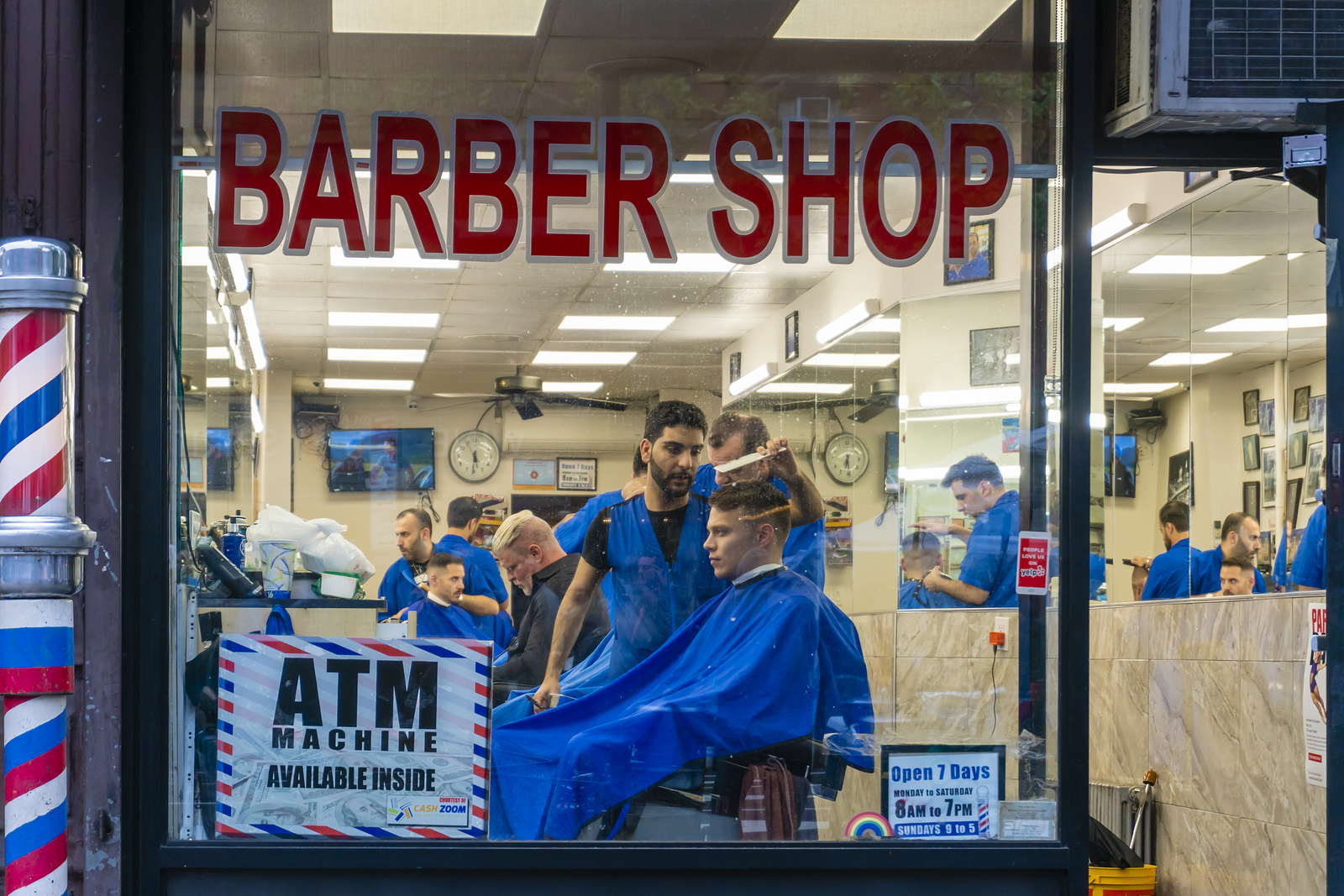
Barber and cosmetology boards mandate hundreds of hours of training. Anything less would jeopardize health and safety, they claim. But after years of debate, Iowa lawmakers decided to call the bluff.
House File 711, which Iowa Gov. Kim Reynolds signed on June 6, 2025, allows barbers and cosmetologists to work without an occupational license, as long as they operate in a state-approved barbershop or salon under the supervision of a licensed practitioner.
In terms of reform, this is huge. The United Kingdom and many other countries do not require barber and cosmetology licensing. But all 50 states and Washington, D.C., have walked in lockstep for years.
No one anywhere could earn a living cutting hair, painting nails, or giving spa treatments without a license. The only outliers were Connecticut, which exempted manicurists for 40 years until 2020, and Alabama, which went without a barber license for 30 years until 2013. Now, Iowa is changing the model for people who cut and style hair.
Des Moines barber Jake Sahr is thrilled. He graduated from a state-approved program in 2021 and opened his shop in 2024. His business, The Mobile Barbering Company, offers complete services in a climate-controlled, custom-made trailer.
Previously, Sahr could not recruit and train barbers until they finished school. Now, he can hire whoever he wants. He sees no downsides. “It is important that the states recognize that licensed professionals comply with the law, understand the law, and can articulate those needs to apprentices and ensure safe standards are maintained for the general public,” he said.
More than anything, Sahr welcomes the chance to help others launch their careers without the associated costs of schooling, which can top $25,000 in Iowa.
“That is a burden I had to bear,” he says. “But now others have the opportunity to avoid that burden.”
Research from the public interest law firm Institute for Justice analyzes the toll. During the six-year study period, Iowa cosmetology students accumulated an average of more than $6,000 in federal loans. We found similar results nationwide.
One reason is the long hours. Many barber and cosmetology students cannot pick up part-time work because their schools require them to be on the floor up to 10 hours daily, providing services to clients without pay, other than tips. Now, they can start earning money on Day One.
The new law provides a path to self-employment. Unlicensed salon and barbershop employees who want to strike out on their own can sit for state exams after 2,000 hours of supervised work.
Doomsayers have long opposed reforms like these. Three things will not change in Iowa.
First, consumer complaints will not rise. Our firm crunched the numbers in New Jersey and found no difference in online reviews compared to nearby barbershops in Pennsylvania, where licensing standards are higher. We found similar results in other service industries. No matter where we looked, occupational licensing rigor did not improve quality.
A second change that will not occur in Iowa will be a spike in safety violations. State inspectors can drop in — like they do at restaurants — but they will not find major health and sanitation issues.
This is because barbering and cosmetology are low-risk occupations. Five times since 1980, Hawaii’s Office of the Auditor has studied whether the beauty industry needs licensing at all. Each time, the answer has been the same: No.
“We found that regulation of the practices of barbering and beauty culture under these chapters was not warranted as the two practices posed little danger to the public,” one report concludes.
Finally, Iowa barbering and cosmetology schools will not disappear. Instead, they will compete to survive. Culinary, art, music, photography, auto mechanics, journalism, and business schools already do this. None of the occupations they serve are licensed. However, students enroll anyway — voluntarily — because they value the instruction.
Sahr will benefit, along with his employees and customers. Other states should give barbers and cosmetologists the same leeway. The time has come to get out of their hair and let them work.