
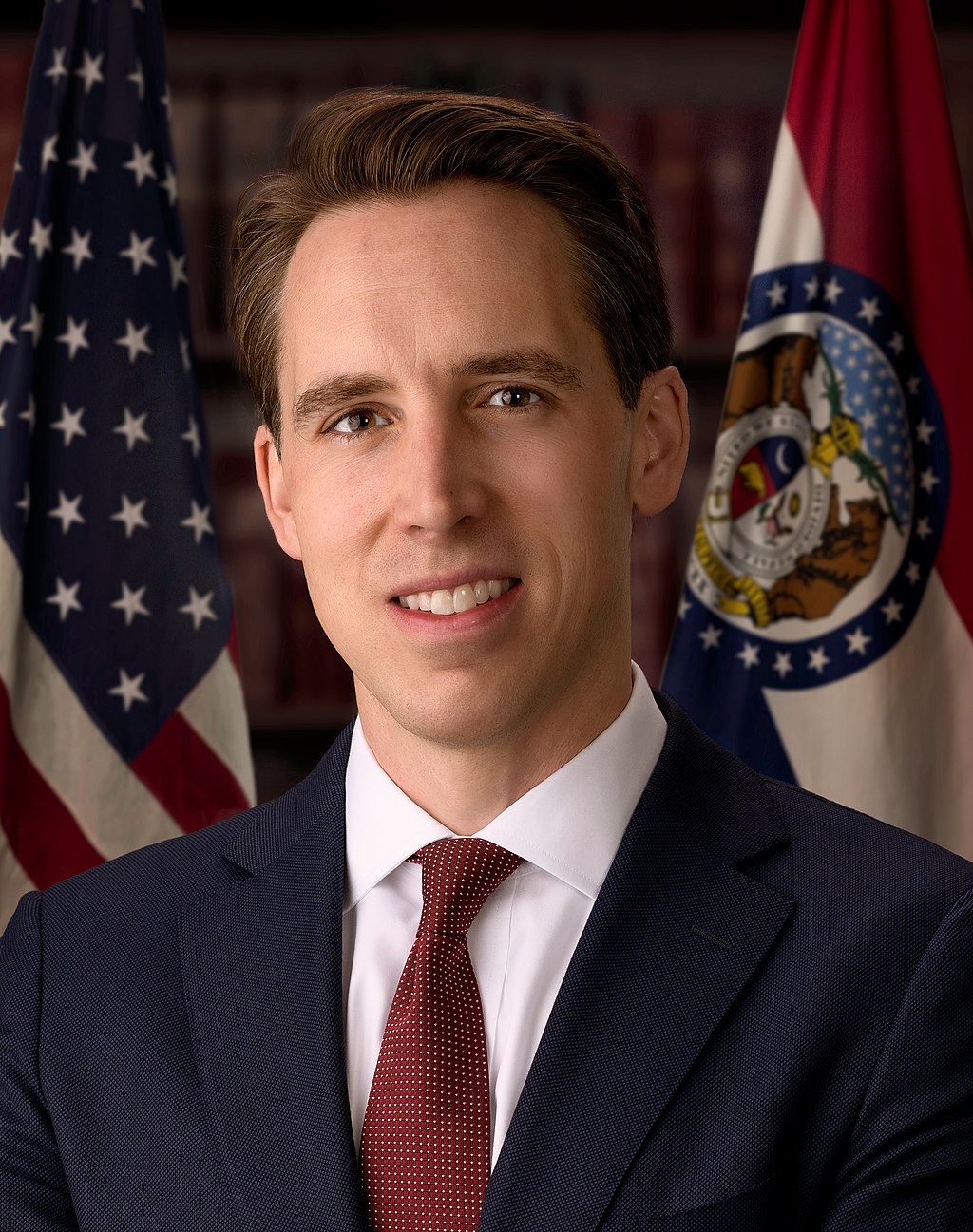
In these first several days post-inaugural, Capitol Hill leaders are setting their agenda and picking their leaders, and the Trump administration is rapidly assembling its new team and readying a slew of America First policies. And yet, on Jan. 10, a senator from Missouri introduced the “Pro-Worker Framework,” a labor wish list with ideas pushed for by Democrats. It is essentially a version of the PRO Act that has been long championed by labor leaders.
That framework flies in the face of the Constitution and American free market values. Legislation emerging from this framework will inexorably lead to small and mid-sized business compulsory unionization, and force companies into contracts decided by a third party that has no understanding of the businesses at hand.
What does Sen. Josh Hawley (R-MO) have against free speech, and what does he have to gain by keeping workers in the dark while they make life altering decisions?
It’s a worst-case scenario: a conservative Republican moving toward a socialist agenda that threatens the viability of many small and mid-size businesses.
Hawley’s framework outlines five changes to current labor law:
1. Under current law, companies have a right to speak with their own employees. This is only natural, as employees deserve as much information as possible to make informed decisions. By delegitimizing those employee meetings, and ominously recharacterizing them as “Captive Audience Meetings,” Hawley seems willing to overlook the First Amendment.
2. The framework introduced by Hawley alludes to language contained in the Employee Free Choice Act and the Pro Act regarding the handling of initial contracts. A third party, with zero concern for the businesses in question, and just as little understanding, will be allowed to decide company payrolls. Instituting a government or government-supported entity is an overreach and does not align with the conservative values that define the Republican Party.
3. The bill calls for increased penalties to employers for committing an Unfair Labor Practice (ULP). Most business leaders and employees think that labor law is transparent and easy to grasp, when in fact it is obscure and full of traps that could lead to a ULP. At the time of this writing, ULP’s are remedial, which means there are no monetary fines for committing them. Under the new framework, if a company is deemed to have committed so many ULP’s that a fair election is impossible, that company can receive the ultimate penalty: be forced recognize a union without an election, or have an election overturned, even after the employees chose to not have union representation. To make matters worse, there is no requirement of proof when a union files a ULP against a company. A union could file hundreds of ULP’s against a company, with potential fines totaling hundreds of thousands, or possibly millions of dollars. In this manner a company could be coerced into recognizing a union, just to make the ULP’s go away.
4. Hawley believes there should be a new workplace board posted like the minimum wage and EEOC. The problem is the twist, such as the one the current and clearly union biased NLRB General Counsel, Jennifer Abruzzo, has made in interpretations including the deliberate misinterpretation of the word “refrain.” Which for no apparent reason except to benefit labor unions, Abruzzo reinterpreted to mean refrain from attending meetings. (More on this later.) Another problem is this proposal puts an additional regulatory burden on employers that is unnecessary.
5. Hawley is obviously reading the one-pager put out by the Teamsters. In particular, he accuses a certain employer of abusive practices without any knowledge of its employees. If a company practices and makes accommodations as an equal opportunity employer, it should be allowed to set standards for the people on its payroll.
Interestingly, Hawley has dramatically shifted in his views on labor and management policies. He has marched on picket lines; he has refused to take a position on right to work laws, and now he is seeking to be the most pro-Big Labor Republican in Congress by introducing this disastrous bill.
If the senator actually wants labor reform, he should focus on the many areas that ought to be addressed. For example, his framework mentions nothing about employees who are trying to decertify the unions who represent them. Those employees could use support to prevent unions from tying up elections with blocking charges indefinitely.
Perhaps Hawley should focus on working with President Donald Trump and his colleagues on breaking down barriers to economic growth, combating inflation and the crisis at the border and supporting an America First foreign policy. This pro-organized labor effort is misguided and an affront to key American principles such as freedom of association. The right to decide who to associate with is a sacred right, but Hawley wants to silence any voices that might turn public opinion against the narrative that the unions want us to hear.
Republican senators should be working with Trump to advance freedom and an American Renaissance – not helping to deliver up victories for the Left.