

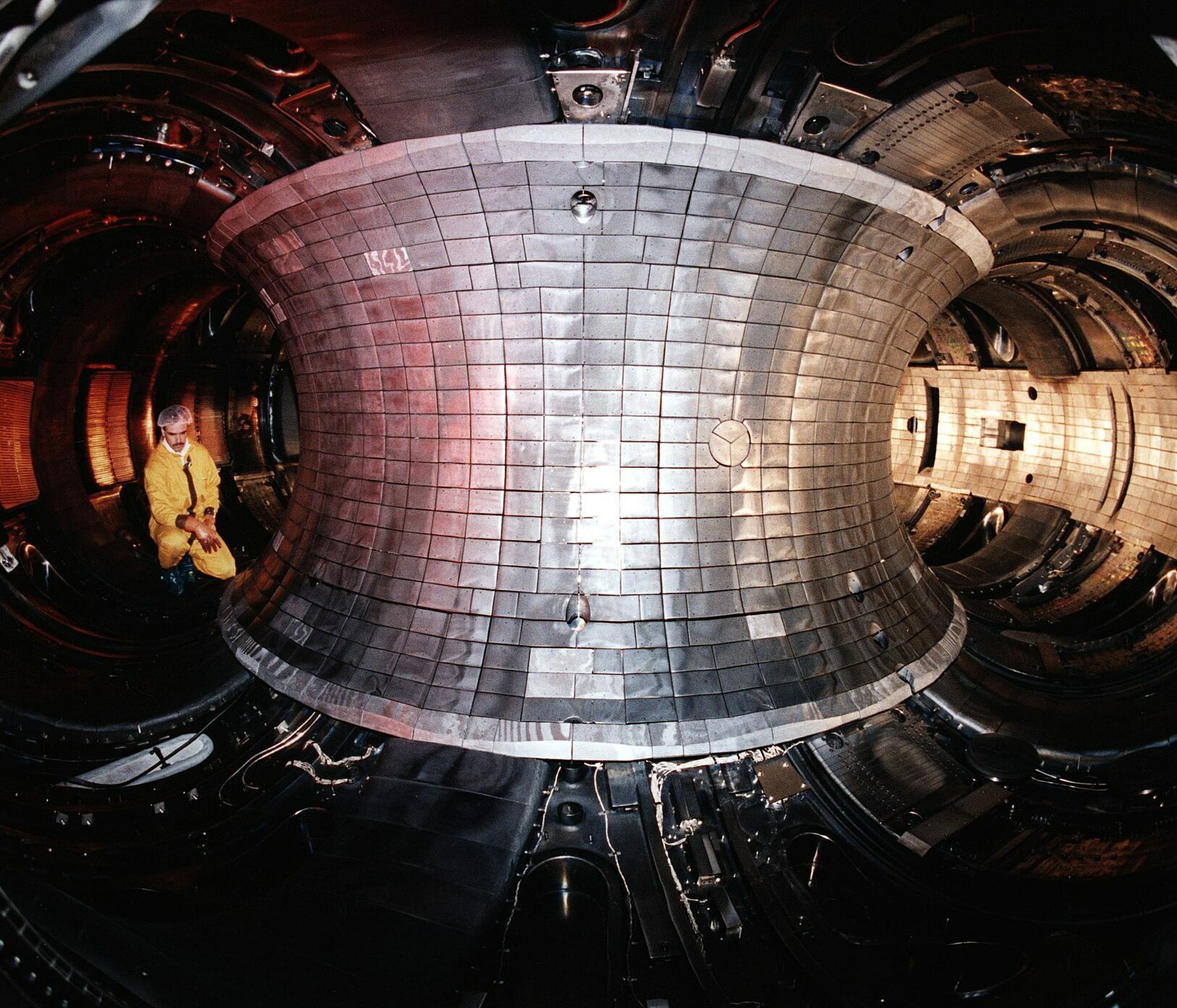
A nuclear fusion breakthrough has always been 30-odd years away, but not anymore. The race for commercialization is on.
Today, 53 fusion energy companies worldwide are competing to be the first to commercialize the technology. Thanks, in part, to an influx of billions of dollars in investments over the last five years, we’ve never been closer to a real breakthrough.
Fusion breakeven, the point where a fusion reactor produces more energy than it consumes, was achieved for the first time at the end of 2022.
Excitingly, follow-up experiments reached ignition and hit higher and higher energy yields. Momentum is growing, with the government and private sector making moves to turn fusion into reality. In the United States, the first fusion power plant is under construction.
After decades of research and development, the time for deployment is now. We know that fusion is secure, clean and safe, just as more traditional nuclear fission is. Commercializing fusion technologies will bolster American energy dominance and help the nation meet ever-increasing energy demand. The commercialization of fusion energy could be a civilization-level achievement, enabling the country that first commercializes and deploys it to access nearly limitless energy resources.
However, American adversaries are also racing toward commercialization.
China is proving to be a worthy competitor. China has invested twice as much public money as any other country in fusion, built massive facilities, and is executing what scientists wrote as America’s fusion roadmap — only faster. Satellite images show Beijing’s sprawling new fusion research hub under construction. If the United States hesitates, the jobs, supply chains and global influence that come with fusion will go east.
We cannot afford complacency. More than 4,500 people work directly in fusion today, and nearly 10,000 more in its supply chain. Companies are already choosing sites for their plants and signing power contracts. With the right policies, those numbers will multiply, and America could deliver fusion to the grid within a decade. Without making fusion a national priority, we risk losing to China.
To account for the immense geopolitical implications of commercializing fusion, the government must work with the private sector to provide funding and scale. This should include robust backing of the milestone-based fusion development public-private partnership program, a streamlined Department of Energy Office of Fusion Energy focused on commercialization, and support for supply chains and fair tax treatment alongside other technologies and clean energy. Clear federal leadership must complement industry ambition to make fusion a reality.
This is more than a race for technology. It’s a race for global leadership, energy dominance and economic strength. The United States has the talent and the capital; what’s needed is government urgency.
Fusion could turn our energy future on its head. America can lead — or lose.