
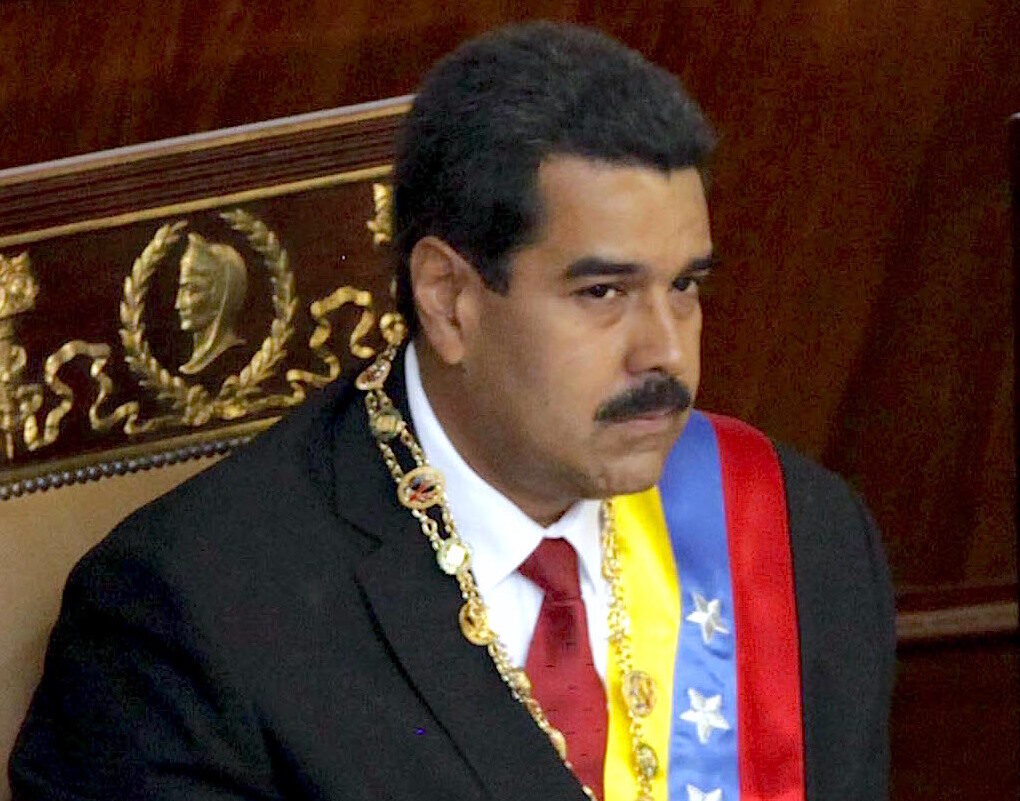
The White House has been explicit about its objectives in the war on drugs: protecting Americans from them. According to Washington, drugs are smuggled into the United States by individuals connected to high-level officials in the Venezuelan government. These officials, it’s claimed, are part of a terrorist and narcotrafficking organization known as the Cartel de los Soles. Though this remains the official justification for recent movements against the Venezuelan government, many signs suggest a different underlying goal: the removal of Nicolás Maduro as Venezuela’s president.
After raising the bounty on his capture from $25 million to $50 million, destroying supposed narcotrafficking vessels off Venezuela’s coast, and declaring that “Maduro’s days are counted,” many now wonder what U.S. officials will do next. Not only are Americans questioning a possible intervention — which half oppose — but Venezuelans, too, are divided. This raises an essential question: Who pays the price of regime change?
A recent “60 Minutes” segment featured interviews with Venezuelans about the prospect of U.S. intervention. Many were afraid to speak publicly, worried someone might overhear — a reflection of the broader fear and repression long reported by journalists and human rights observers.
Among those who did speak, reactions were mixed. Some expressed fear of an invasion, worried for their lives and loved ones should armed conflict erupt. Others articulated a more favorable impression — suggesting that U.S. intervention may be the only way to end the current regime.
For many, however, the response was a sad and unsettling indifference.
Disillusioned by years of political paralysis, a crumbling economy and hunger, they doubted any real change was possible — through internal or external means.
For these Venezuelans, politics has become a distant concern. Their priority is survival as they struggle to afford food, transportation and medicines.
Their fears and frustrations reflect a broader, often neglected, regional history. Latin America has endured numerous U.S.-backed interventions — some direct, others covert. Guatemala in 1954, the Dominican Republic in 1961, Chile in 1973, and Panama in 1989 all saw leaders deposed, often in the name of protecting “U.S. interests.” Some operations achieved their immediate objectives, but the consequences of these interventions cast shadows well into the present day — prolonged violence, political instability and weakened institutions.
Other interventions, such as the Bay of Pigs invasion of Cuba in 1961, failed.
Venezuela already suffers from institutional decay and frequent violence. Any U.S. intervention would likely intensify these problems — as we’ve seen time and again. Even if Maduro were removed, who would replace him? The armed groups and colectivos — paramilitary and criminal organizations that thrive under the current system — would likely mobilize to protect their interests, threatening to plunge the country into deeper chaos.
A U.S. invasion, however framed, would impose steep costs on both nations. For the United States, an attempt at regime change in Venezuela would likely be another foray into failed foreign policy, with all the costs that go with it. A destabilized Venezuela could also trigger another wave of migration across the region, straining neighboring countries and potentially reaching U.S. shores.
For Venezuelans, the costs would be even greater. Beyond the immediate human toll of conflict, the long-term costs are incalculable. Even if Maduro were removed, a chaotic transition could destroy prospects for rebuilding Venezuela’s institutions, economy and civil society.
The hard truth is that many Venezuelans see the prospect of change, from within or outside, as a remote possibility. It’s easy to see why. The voices of ordinary Venezuelans are often ignored in debates about their country’s future. Political actors from all corners — Washington, Caracas, opposition leaders and regional powers — are locked in a geopolitical contest no one wants to lose. Yet, the people who will live with the consequences are Venezuelans themselves. They will bear the brunt of violence, displacement and further economic collapse.
Everyone talks about Venezuela, but few speak about Venezuelans. Their fears, hopes and suffering are pushed aside in policy conversations that treat their country as a piece on a chessboard. Some fear war; others fear the permanence of tyranny. All share the same uncertain fate — paying the high price of decisions made far beyond their control.