

“For years, our industry has been sounding the alarm that natural gas demand is rising faster than the infrastructure designed to move it. The cracks in the foundation of this affordable, reliable, secure energy system are showing — and they’re getting wider.”
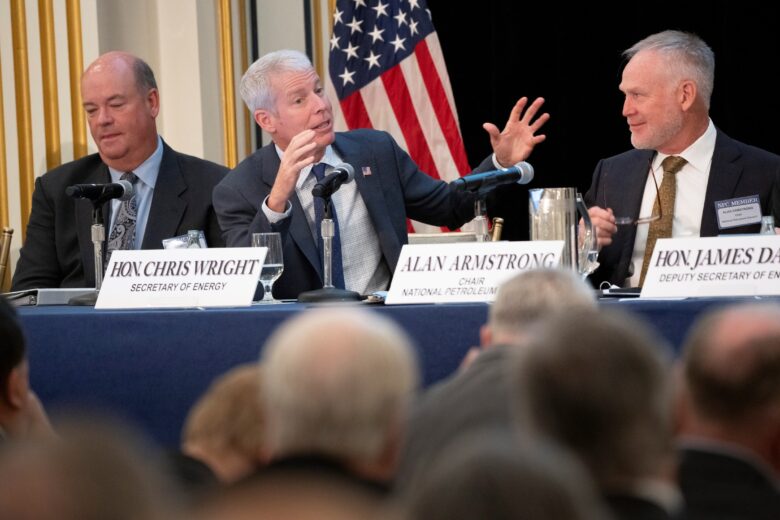
That was the warning from Toby Rice, CEO of EQT Corporation, at the December meeting of the National Petroleum Council (NPC), where the advisory committee released two reports addressing those cracks in America’s energy grid.
One report proposes permitting reforms for a system increasingly incapable of keeping up with the need for new pipelines, expanded battery storage, and LNG export capacity.
The companion NPC study, focused on gas-electric coordination, warns that the U.S. power system is becoming more dependent on natural gas without the infrastructure to supply it reliably during peak demand.
The NPC is a federally chartered but privately funded committee established at the request of President Harry Truman and tasked with advising the White House on domestic energy policy. Its message: Grow America’s energy infrastructure today, or pay for it in lost jobs and productivity.
The infrastructure gap is hard to deny.
Between 2010 and 2022, U.S. natural gas demand grew 49 percent, but pipeline capacity increased just 26 percent, and storage capacity grew by an abysmal 2 percent. The council argues that this imbalance threatens grid reliability, raises prices for consumers, and risks undermining U.S. competitiveness.
“It’s reached the point where the money that gets wasted in the permitting process would disgust every American,” said council Chair Alan Armstrong of Williams Companies.
U.S. Energy Secretary Chris Wright, who commissioned the reports as part of a broader review of future U.S. energy systems, said the current, cumbersome system that slows new production is hitting Americans in the wallet.
“We have an increase in electricity prices because of political decisions, policy decisions. It was a choice, not an unfortunate event or scarcity problem. Political choices drove the price of electricity up.”
To fix the problem, the NPC proposes a two-track strategy: immediate improvements and a longer-term restructuring of how infrastructure is authorized.
In the near term, the council recommends clarifying the scope of environmental reviews, limiting duplicative assessments by multiple agencies, and reforming judicial review to end seemingly endless legal challenges.
The report also calls for narrowing the scope of Clean Water Act Section 401 certifications to focus solely on water-quality impacts rather than broader environmental or climate considerations, and for expanding the use of general permits and categorical exclusions for predictable, low-impact projects.
“With sensible reform, costs for families can be lowered, reliability strengthened for communities, and investment in infrastructure accelerated across all energy systems while upholding environmental standards,” said François Poirier, president and CEO of TC Energy and chair of the council’s permitting committee. “This is the blueprint to build, and if implemented, can secure America’s energy future.”
But the council’s longer-term proposal is more ambitious.
The NPC outlines a new “Qualified Infrastructure Authorization” (QIA) framework that would allow projects meeting pre-specified environmental and engineering standards to receive expedited approval. Rather than front-loading reviews, the system would shift more responsibility to ongoing monitoring and enforcement.
Poirier said creating certainty in permitting timelines is essential for U.S. investment.
“Predictable permitting is foundational to American competitiveness, fueling the energy systems that enable re-industrialization and economic growth,” he said. “This is the blueprint to build, and if implemented, can secure America’s energy future.”
Industry groups, including pipeline operators and utilities, quickly praised the report.
Institute for Energy Research President Tom Pyle noted that electricity generation from natural gas has grown more than any other source over the past decade, but permitting constraints make building pipelines nearly impossible.
“The answer to not just energy problems, but infrastructure concerns across the board, is a full overhaul of our permitting system, including substantial reforms to the underlying statutes,” Pyle said. “Our ability to tap into our natural resources, support our population, and grow into the future is hampered by a regulatory and permitting process designed to discourage investment. Lengthy and unpredictable federal permitting is slowing development and pushing costs higher for consumers and businesses alike. Speeding up approvals for pipelines, offshore projects, and other infrastructure is key to boosting energy security and keeping the U.S. competitive.”
The NPC’s findings stop short of endorsing specific legislation, but the message is clear: Without comprehensive permitting reform, the U.S. may struggle to maintain energy reliability, meet industrial demand, and compete globally.