
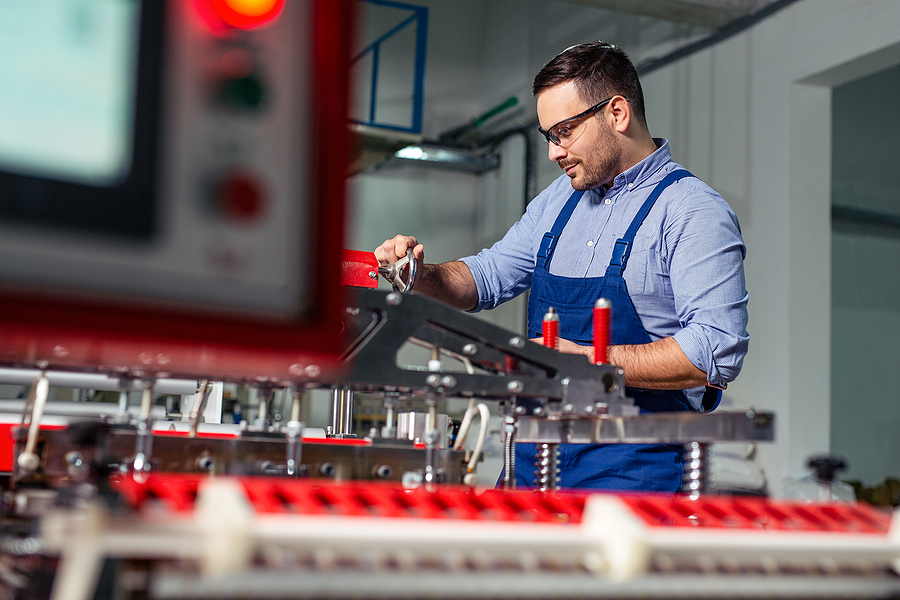
President Donald Trump’s first term ushered in a manufacturing revolution in America. He bulldozed through liberal red tape and job-killing policies with good old-fashioned common sense. He eliminated impractical rules that served no purpose other than to strengthen the chains of bureaucracy and weaken our industrial base. He lowered taxes, prioritized energy independence, and expanded workforce training, re-energizing the American industrial spirit, allowing our manufacturers to focus on what they do best: grow, innovate and expand.
And now, in his second term, Trump is gearing up to supercharge American manufacturing once again because he knows that our U.S. manufacturers are the bedrock for our nation’s economic freedom. Manufacturing plants are not just churning out products – they are the economic lifeblood of our local communities from our coasts to our heartland. They anchor our towns with high-paying American jobs that do not require a high-cost four-year degree. These jobs offer true economic mobility and a path to a stable and prosperous life.
The plastics industry, in turn, is the most vital cornerstone of our manufacturing base. Over one-quarter of all manufacturing depends on plastics. President Trump has recognized the critical nature of these lightweight, durable, and moldable materials that underpin every U.S. manufacturing sector. The Biden administration’s tangled web of overlapping and costly regulations was pushing our manufacturing opportunities — and, with them — our jobs, into the arms of foreign competitors. It is heartening that Trump is once again standing up for American workers.
Preserving the manufacturing-friendly policies in the Tax Cuts and Jobs Act will blunt the damaging impact of the Biden era. Maintaining a robust manufacturing base, supported by a strong plastics sector, is vital to keep nurturing materials innovation and maintaining our global competitiveness. And it allows us to maintain a sharp edge in the cut-throat global economy.
Let’s take a step back from the liberal hysteria over plastics and set the record straight.
Plastics have single-handedly transformed entire industries, improving the lives of American consumers and people across the entire globe. For example, renewable energy technologies such as wind power, solar energy, and electric vehicles depend on plastics. Plastic components are integral to wind turbines and solar panels, playing a critical role in enhancing durability and efficiency. Plastics also make vehicles lighter and more fuel-efficient, significantly reducing emissions. These achievements are often overlooked in the outcry for “greener” (and costlier) alternatives.
Similarly, plastics have revolutionized healthcare. They have enabled the creation of lifesaving and life altering medical marvels such as IV bags, medical tubing, custom prosthetics and heart valves. In the hand-wringing over plastics, their essential role in developing affordable, customizable and widely accessible healthcare solutions that save countless lives is often overlooked.
Plastics have also been a game-changer for the food industry. The impact of advanced packaging materials is one example. Innovative products such as vacuum-sealed bags and resealable containers have dramatically reduced food waste and extended the shelf life of perishable foods. As a result, Americans can enjoy a diverse range of fresh, nutritious foods year-round, sourced from farms across the country – directly because of plastics.
Moreover, a strong plastics sector protects our national security to a degree that cannot be overstated. Domestic production of plastics decreases dependence on imports, increasing U.S. resilience when foreign countries are not playing nice. From our telecoms networks, to our electrical grid, to our water supply – everything critical relies on plastics. Plastics also support energy efficiency, contributing to U.S. energy independence.
Our military advancements also rely on cutting-edge materials science. Plastics provide durable and lightweight options for equipment, specialized clothing, and infrastructure. And in times when global supply chains are unstable and increasingly unreliable, investing in domestic plastic production will reinforce our self-sufficiency and with it, our freedom as a nation.
Given the critical role of plastics in all facets of manufacturing, and relatedly, in most every aspect of American life, we should be doing everything in our power to actively promote its production in the U.S., where we can ensure a sufficient and high-quality supply. We cannot and must not depend on foreign suppliers alone.
Supporting Made-in-America plastics means supporting an innovative industry spearheading advances in recycling that allow old plastics to be manufactured into new materials, and advances in biodegradable products. It also means reinforcing our commitment to environmental stewardship and affirming our leadership role in championing sustainable practices across the globe. The last administration did not understand that it is entirely possible to be pro-growth, pro-jobs, and pro-environment.
It is rare to find a sector as critical to both our economic freedom and our national security as plastics. The magic of manufacturing, and with it, plastics, isn’t just about assembly lines and factory floors. Each facility supports a network of local businesses and services, fueling vibrant community ecosystems. Hundreds of thousands of families pursue the American dream through the hard work and dedication tied to jobs supported by this sector. Plastics not only supports individual livelihoods but also fuel the broader economic growth that is the backbone of our national prosperity, and that hardens our national security.
It is therefore pragmatic, and essential, to ensure a robust and reliable supply of plastics, made right here in America. We must eliminate the impractical, job-choking regulations churned out by Biden-era overreach. We need to bring back the common-sense Trump framework that will reinvigorate our manufacturing base and ensure our economic freedom for generations to come.