

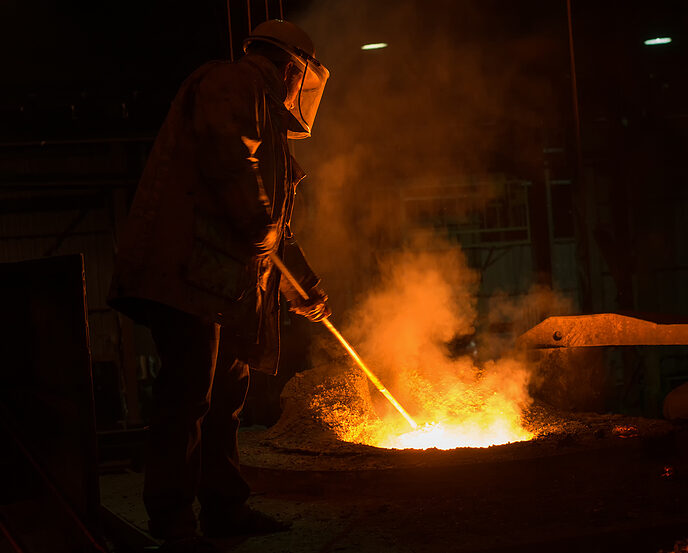
Less than three months after the ink dried on the Nippon Steel purchase of U.S. Steel, the new Japanese owners have announced they will close U.S. Steel’s Granite City Works in Illinois. The plant will stop making steel in October, and the 800 employees will remain “employed” at their current pay to “maintain” the facility’s steelmaking capacity until the end of 2027. That’s when the protections against layoffs they received under the U.S. Steel sales agreement will run out.
The Granite City workers have seen this movie before. The plant, which started producing steel 125 years ago, was closed at the beginning of 2016. It is one of U.S. Steel’s blast furnace mills, a traditional way of making steel by melting iron ore, among other steelmaking ingredients.
When a New York Times reporter visited in November 2016, the human cost was evident. The union website was telling the still-idle workers about the union’s food bank and where they could pick up donated turkeys for Thanksgiving.
One worker told the reporter how he was hired there in 1999 at age 38, starting out shoveling steel byproduct waste and then moving to a crane operator who handled the 350-ton cauldron of molten steel. He earned $24.62 an hour plus overtime, enough to make $86,000 a year. He put his daughter through grad school, and his son started college. The head of the local union told the Times that his duties were now akin to a social worker rather than a team leader.
President Trump began his American steel rescue operation in 2018 with the “Section 232” tariffs. As a result, the Granite City Works mill got a new lease on life. However, the blast furnaces were shut down again in 2019 and 2023, and the remaining processing of steel from steel slabs is being terminated. In a couple of years, the home mortgage foreclosures will start.
It is not only the human cost; there is a strategic, national security dimension to all this. Blast furnaces are how a country makes new steel from iron ore instead of by melting scrap metal. When the first Trump administration imposed steel tariffs in 2018, the Commerce Department’s Section 232 steel report said the country’s blast furnace mills’ capacity went from 38 facilities in 1975 to 13 facilities by 2016, primarily due to a combination of import penetration, Chinese overcapacity making it costly to make steel here, and a decarbonization push.
With these mills shutting down or producing very little, Commerce warned that further losses would weaken our ability to meet military and critical-industry needs. Blast furnace mills remain central to virgin steelmaking, to maintaining hot-metal know-how and coke/ironmaking ecosystems, and to producing defense-critical grades that can’t be switched to scrap-based production overnight.
As these mills die, we get fewer steel workers, lose supplier networks and weaken the industrial muscle memory that true national independence requires. Granite City’s closing is a warning light on the dashboard.
The steelworkers union at the Granite City Works has called for $500 million of the Nippon investment to be applied to modernizing the Granite City Works. The U.S. government has a golden share in this deal, and it could be exercised to make that investment and bring back full production at Granite City, but it is unclear if that will happen. That mill may be too old to go on, and Nippon does not seem interested in reviving it.
It’s a problem for Trump. During a rally at a U.S. Steel mill outside Pittsburgh in May, he said of the Nippon deal, “I’m going to be watching over it. There will be no outsourcing and no layoffs whatsoever.”
That can’t be said of Granite City now. With that mill approaching its final days, the Trump administration should keep its tough stance on existing steel tariffs, rather than providing exemptions and allowing for more imports if it wants to signal to the industry that its investments are sound in the homeland.