

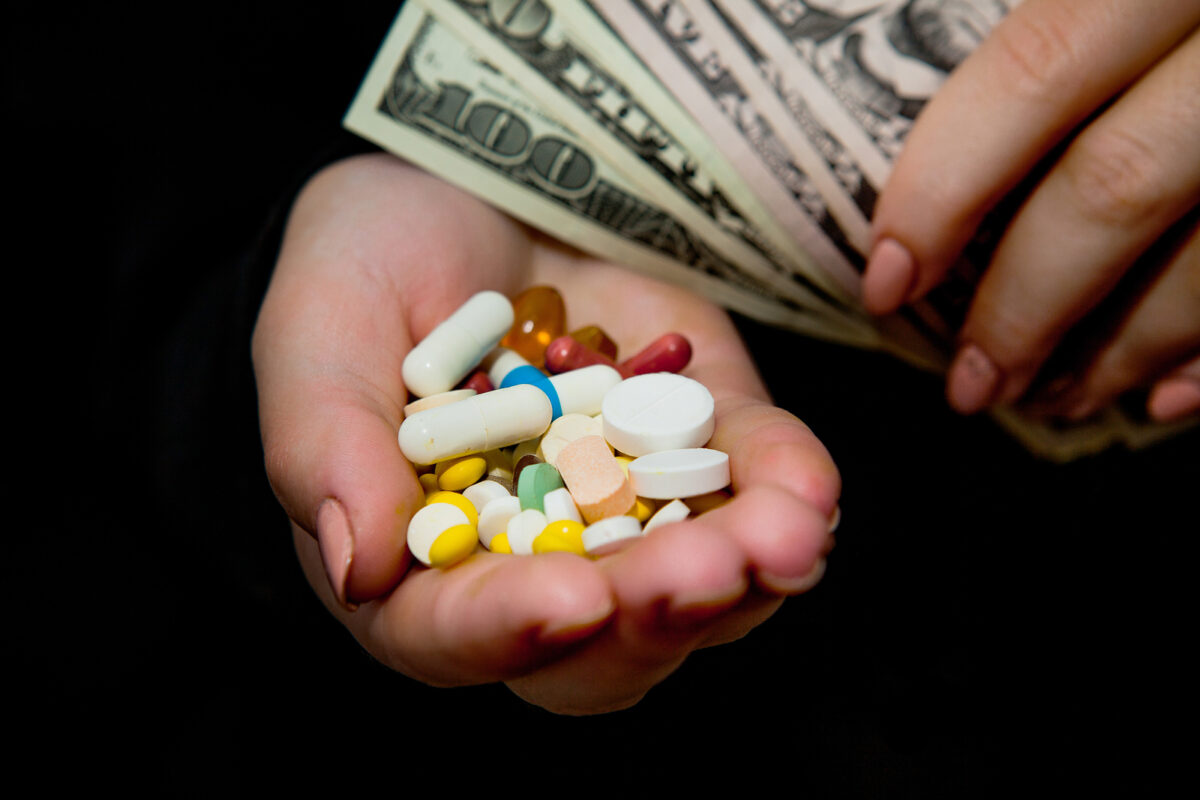
Pharma companies are planning to increase the price of more than 350 medications, including COVID vaccines and cancer treatments. The latest cost hike comes months after President Trump described deals with 14 drugmakers as “the greatest victory for patient affordability in the history of American healthcare,” even though ordinary people are unlikely to feel the benefits anytime soon.
If even the president can’t persuade Big Pharma to rein in its excessive pricing policies, Americans have no choice but to take action themselves. As medicine becomes increasingly unaffordable, our only choice is to make lifestyle changes that keep the doctor at bay and prevent our dollars from flowing into pharmaceutical companies’ already bulging coffers.
I’ve spent more than two decades working in full-body health, recovery, fitness and rehabilitation. What I’ve seen again and again is that too many people fall into the same trap. They focus all their anger on the pharmaceutical industry while ignoring the most important part of the equation: the daily choices that determine whether medication becomes a necessity in the first place.
No other developed nation spends more on prescription drugs or reaches for them as quickly as the United States. Despite years of political promises, hearings, outrage, and headlines, very little has changed. Prices keep climbing. Dependence keeps growing. Families keep struggling to afford medications they never expected to need long-term.
Instead of trying to defeat Big Pharma, we should focus on making it less relevant to our daily lives. Nothing threatens high drug prices more than millions of Americans needing fewer drugs.
Consider statins. Some 92 million Americans — more than one in four adults — were taking these cholesterol-lowering medications as recently as 2019. Some people genuinely need them. Many do not. I’ve worked with countless clients whose cholesterol issues weren’t driven by genetics, but by chronic stress, sleep deprivation, poor nutrition and lack of movement. With the right guidance and consistency, many were able to reduce or eliminate their dependence on medication while improving their overall health.
Pharmaceutical advertising and the pace of modern life have conditioned us to believe that every problem has a pill. It’s easier to grab a prescription than to walk a few times a week or cook at home. It’s simpler to accept chronic fatigue, joint pain, or stress as “normal” than to rebuild habits that protect the body instead of patching symptoms.
I understand why. I know how powerful small, realistic adjustments can be. Health transformations rarely come from dramatic overhauls. They come from manageable, everyday choices that compound over time.
When I work with patients recovering from injury, clients struggling with mobility, or people managing chronic conditions, the pattern is always the same. Small, consistent actions do more to restore the body than any prescription alone. Better sleep reduces inflammation. A short daily walk stabilizes blood sugar. Strength training supports joint health. Real meals outperform processed food. Stress management protects every system in the body. These fundamentals sound simple because they are — but they are also profound and supported by decades of medical science.
This isn’t about pretending medication isn’t necessary. For many people, it absolutely is. We’ve become far too quick to rely on drugs when healthier habits can often do the job just as well, or better. And when medication becomes the default, we hand the pharmaceutical industry exactly what it wants: predictable, lifelong demand that keeps prices high.
That’s the real leverage point. If fewer Americans need chronic medications in 2026, prices will fall faster than Congress could ever legislate them down. If more people prioritize preventive health, we’ll spend less on side-effect treatments, emergency interventions, and long-term medical cycles that drain family budgets.
Americans are right to be frustrated by high drug prices. Frustration alone won’t lower them. What will is something far more powerful: a country full of people reclaiming their health one small decision at a time.
That starts not in Washington, but in our homes, our kitchens, our routines, and our belief that we can live healthier without waiting for anyone else to fix it. Let’s say yes to lifestyle changes that reduce our reliance on drugs — and help us take back control of our health.