

Imagine a country of 170 million people suddenly finding itself without a single police officer on duty. It sounds like a far-fetched tale, but this is the reality that unfolded in Bangladesh. A nation once tightly controlled by more than 200,000 police officers now finds itself without any law enforcement presence, and the story behind this dramatic turn of events is as compelling as it is tragic.
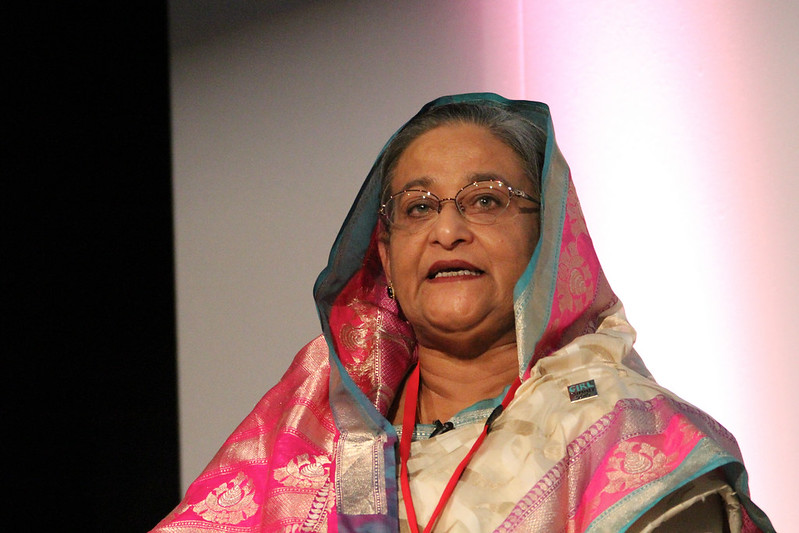
For 16 years, Bangladesh has been under the iron-fisted rule of Sheikh Hasina, a dictator who used the police as her personal army. These officers were not just enforcers of the law; they were instruments of fear, carrying out orders to kill, torture, imprison, and silence anyone who dared to oppose her regime. The police force, in essence, was an extension of her political party, filled with loyalists ready to do her bidding at any cost.
The spark that ignited the firestorm began July 1, 2024. The High Court of Bangladesh reinstated a controversial quota system, one that reserved 56 percent of government jobs for certain groups, including 30 percent for the descendants of “freedom fighters” from the 1971 war of independence against Pakistan. This system had been a source of contention for years, particularly because the definition of a “freedom fighter” was nebulous and politically manipulated. In reality, the title was often awarded based on the whims of the government, serving as a means to reward loyal party members rather than genuine war heroes.
The last time students protested the quota system was in 2018 when the government extended these benefits to the grandchildren of freedom fighters. The protests were fierce, and eventually, the government relented, abolishing the quota. But in July 2024, the government brought the system back, believing its grip on power was now unshakable.
What it didn’t anticipate was the fury of the students. Enraged by the government’s decision, they took to the streets in massive numbers. Sheikh Hasina responded with characteristic brutality, labeling the protesters as terrorists and traitors, implying their ancestors were enemies of the state. This only fueled the students’ anger, who began chanting in the streets, accusing the government of being “autocrats” and themselves “rajakars” — a deeply insulting term for those who collaborated with the enemy during the war of independence. This infuriated Hasina when she saw students do not mind calling themselves rajakars.
In a desperate attempt to crush the uprising, Hasina ordered the police to open fire on the students. The result was a massacre — 400 students were killed in a matter of hours. But instead of quelling the unrest, the bloodshed only galvanized the nation. The people of Bangladesh, horrified and outraged, joined the students in their protests, and a march toward the prime minister’s palace began.
As the situation spiraled out of control, Hasina turned to the military, ordering them to shoot the protesters. In a dramatic twist, the army refused to fire on their fellow citizens. This moment marked the beginning of the end for Hasina’s regime. Sensing the tide turning against her, she fled the country August 5, abandoning her people and her government.
In the chaos that followed, the entire police force — 200,000 officers — vanished. They shed their uniforms, left their weapons behind, and went into hiding, terrified of being targeted by the enraged populace. With the police gone, the country was plunged into a state of anarchy.
A strange and unexpected thing happened next. Instead of descending into complete chaos, the students and ordinary citizens stepped in to fill the void. They began managing traffic, policing their own communities, and ensuring safety in their neighborhoods. The army, now siding with the people, offered its support in maintaining order.
For three days, Bangladesh existed without a government, and now without a police force, and something remarkable occurred. Life without police, it turned out, was not as terrifying as many had feared. Prices of goods dropped as the extortion and bribes that had become commonplace under the police’s watch ceased.
Though the country was technically lawless, with the potential for violence ever-present, people found a strange sense of calm in their newfound freedom.
In a country where law enforcement had long been synonymous with corruption and oppression, the absence of police revealed a truth that had been buried for years: Sometimes, the greatest threat to a nation’s peace is not the lack of law enforcement but the presence of a corrupt one.
As Bangladesh teetered on the edge of an uncertain future, its people learned that in the face of tyranny, unity, courage and love could create a new kind of order — one that no dictator could ever hope to suppress.