
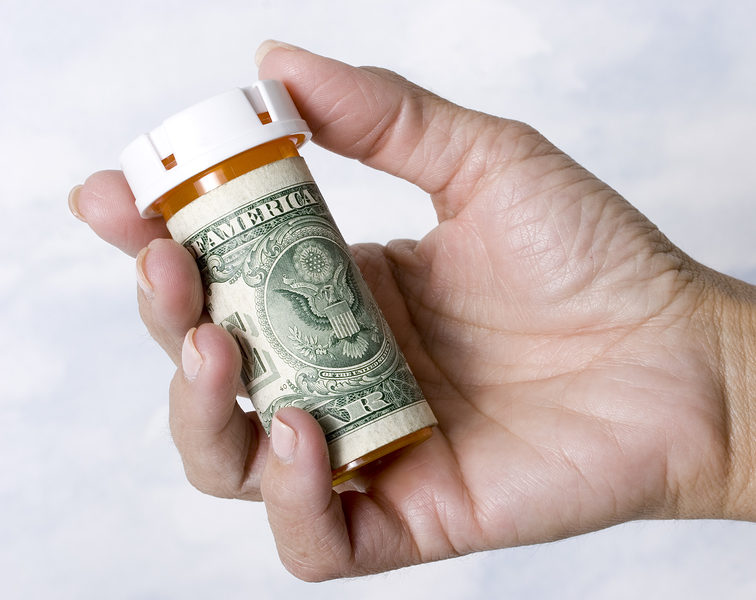
Eighty percent of Americans agree that prescription drug prices are too high. One in four Americans struggle to afford their medications, and nearly one in three don’t take their medications because they’re too expensive. Evidently, something has gone terribly wrong if patients have to choose between buying groceries or their medication. It’s my duty to expose the perpetrators behind this crisis and their accomplices.
Capitalism dictates that competition lowers prices. It’s an adage, but it’s true. Unsurprisingly, the sharp increase in drug prices, especially life-saving drugs, coincided with the concentration of market power by a few large pharmaceutical companies. These companies enjoy vast pricing power and profit margins at the expense of Americans trying to scrape by.
Now, big pharmaceutical companies are lobbying Congress to pass a bill that would distort the patent system in their favor and stamp out competition from generic and biosimilar drug manufacturers. These companies often file dozens of patents for a single drug purely to prevent competitors from making similar and cheaper alternatives. The PREVAIL Act, the bill recently eked out of the Senate Judiciary Committee, would exacerbate that problem and prevent us from lowering drug prices.
The PREVAIL Act would make it harder to challenge invalid or meritless patents at the Patent Trial and Appeal Board (PTAB). By enacting the America Invents Act on a broad bipartisan basis, Congress established the PTAB in 2012 as a way for the public to challenge patents more efficiently than in District Court.
It takes $3.5 million and many years to litigate the validity of a patent in District Court, which is unfeasible for many generic and biosimilar manufacturers. At the PTAB, patent litigation costs, on average, $500,000. While expensive, the PTAB allows far more competitors to make their case, which has spurred billions in growth across the economy.
PTAB, through a statutorily established process called inter partes review, determines whether an existing patent is legitimate or not. Often, they’re bogus. When the PTAB knocks down bad patents, then patients win as does the broader patent system. For instance, successful inter partes review cases cut the price of the cardiovascular disease treatment prasugrel by 97 percent, the dementia treatment rivastigmine by 75 percent, and the opioid addiction treatment called buprenorphine by 50 percent. It’s clear that PTAB, by offering better access to inter partes review proceedings, can lead to better outcomes for patients.
However, if the PREVAIL Act passes, it strips away competitors’ legal standing unless they have previously fought a District Court case. That would immediately kill most competitors’ chances at the PTAB, given how inaccessible and expensive District Court litigation has become, and prevent patient advocacy groups and nonprofits from bringing cases on behalf of the American people.
Sen. Chris Coons, D-Delaware, is considering making a legal standing exception for drug manufacturers. While this proposed change would benefit the patients in some cases, other provisions in the legislation such as mandatory stays of an inter partes review during related decisions before a District Court would limit these group’s ability to challenge questionable patents based on cost and time.
Additionally, restricting interested groups from coming before the PTAB nevertheless suppresses competition in the tech, automobile and retail industries. Senators shouldn’t pick winners and losers but instead promote competition across the economy.
The bill would also force the PTAB to presume the validity of bad patents unless the challenger meets an almost impossible standard of evidence. Instead of protecting innovators, the PREVAIL Act essentially takes away their access to a fair trial.
Opponents argue that the PREVAIL Act would help prevent repetitive challenges against legitimate patent owners. However, only 1 percent of challenges come from serial petitioners, and almost 50 percent of patent challenges at the PTAB have turned out to be correct, even though patent owners have more legal advantages!
The PTAB hears real cases from real competitors, period. Opponents argue that the PTAB is a “death squad” that kills patents. Yet, only 10 percent of claims are wholly invalidated, and patent owners still win most of the time. The PTAB works, and we must protect one of the only viable paths for small businesses to challenge corporate anti-competitive tactics.
In the last couple of years, Congress has done a lot to lower prescription drug costs. If they want to continue to grow competition and lower prescription drug prices, Congress should vote NO when the PREVAIL Act reaches the Senate floor. Doing so would send a message to patients across America that Congress is not with Big Pharma but with you.