
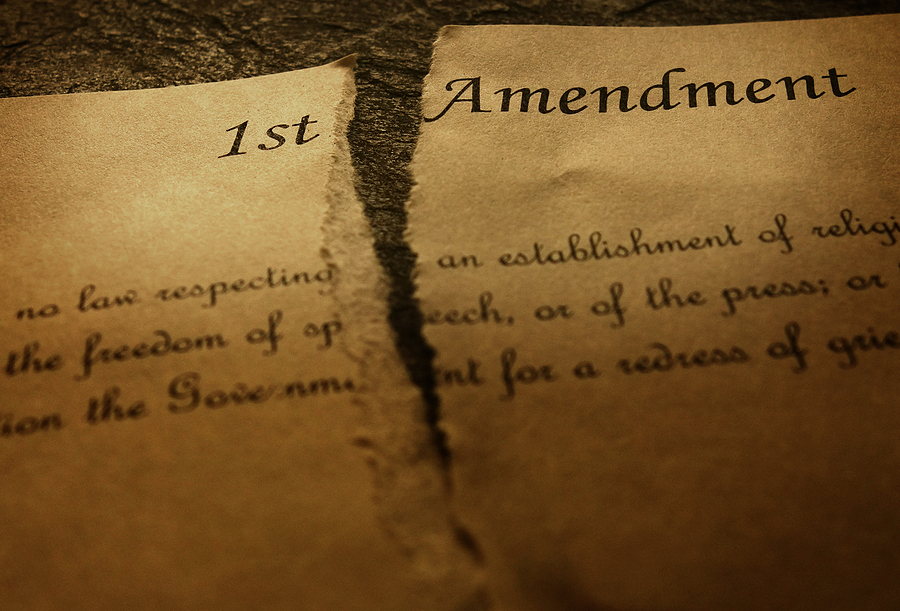
California Assembly Bill 2839 was passed to address fears that AI-generated deepfakes would threaten democracy. On October 3, a federal judge ruled against the bill, setting the precedent that laws to censor political imagery, AI-generated or not, are unconstitutional under the First Amendment.
U.S. District Judge John A. Mendez wrote in his decision, “Counter speech is a less restrictive alternative to prohibiting videos such as those posted by Plaintiff … Supreme Court precedent illuminates that while a well-founded fear of a digitally manipulated media landscape may be justified, this fear does not give legislators unbridled license to bulldoze over the longstanding tradition of critique, parody, and satire protected by the First Amendment.”
California Gov. Gavin Newsom suggested that the bill was intended to prevent satirical political ads like one retweeted by Elon Musk. “Manipulating a voice in an “ad” like this one should be illegal. I’ll be signing a bill in a matter of weeks to make sure it is.” This ruling comes amid controversial regulatory guidance for the use of AI-generated materials in elections.
Civil society organizations are concerned that attempts to curb AI-generated image use may be more threatening than the problem itself. Foundation for Individual Rights and Expression president Greg Lukianoff raised his concerns that AI regulation will erode First Amendment protections in congressional testimony. “The most chilling threat that the government poses in the context of emerging AI is regulatory overreach that limits its potential as a tool for contributing to human knowledge.”
Criticism of AI-generated materials rarely substantively differs from criticism of other media. In Rep. Eric Swalwell’s congressional testimony, he criticized the House GOP’s Twitter account for sharing an AI-generated meme based on a possibly fake news story.
However, it is possible to create a similar “meme” image using traditional photo-editing software such as Adobe Photoshop, and nothing in the Tweet text depends on a specific news story or false claim. Swalwell raises concerns not about the medium, but the substance of the image. However, political satire — the substance of the image — has long been protected under the First Amendment.
Meanwhile, evidence casts doubt on claims about AI’s influence in elections. “Fears about the impact of generative AI on misinformation are overblown,” an article in the Harvard Misinformation Review finds. “When it comes to new information technologies, such panics might be based on the mistaken assumption that people are gullible, driven in part by the third-person effect.”
An MIT Technology Review suggests that these concerns may worsen underlying concerns around elections, unrelated to AI. “Overly alarmist narratives about AI’s presumed effects on democracy risk fueling distrust and sowing confusion among the public — potentially further eroding already low levels of trust in reliable news and institutions in many countries.”
Fears of AI in elections may be a hammer looking for a nail. These fears come at a time of broader backsliding of First Amendment understanding. In the vice-presidential debate, Democratic nominee Tim Walz demonstrated the extent officials misunderstood the First Amendment. “Walz made two major free speech fumbles. He claimed there is no First Amendment right to ‘hate speech’ and repeated the myth that you can’t shout ‘fire’ in a crowded theater.” While the proliferation of false information about the First Amendment may not change the law, it may motivate attempts to trespass over the First Amendment.
As Lukianoff explains, he worries this could end up setting a troubling precedent for AI, creating “a regulatory panic that could result in a small number of Americans deciding for everyone else what speech, ideas and even questions are permitted in the name of ‘safety’ or ‘alignment.’”
Defending freedom of expression is not limited to defending the letter of the law. Other measures may create a chilling effect on speech, leading to a more closed society while barely avoiding First Amendment scrutiny. While we should celebrate Judge Mendez’s decision, we must remain vigilant against legislation that threatens the spirit of free speech.