

Vice President Kamala Harris likes to tell people she “grew up in a middle-class family,” as she hopes to win this year’s presidential election against Donald Trump. But one political player supporting her could use his influence to help a big-money client in the restaurant business knock out middle-class mom-and-pop eateries.
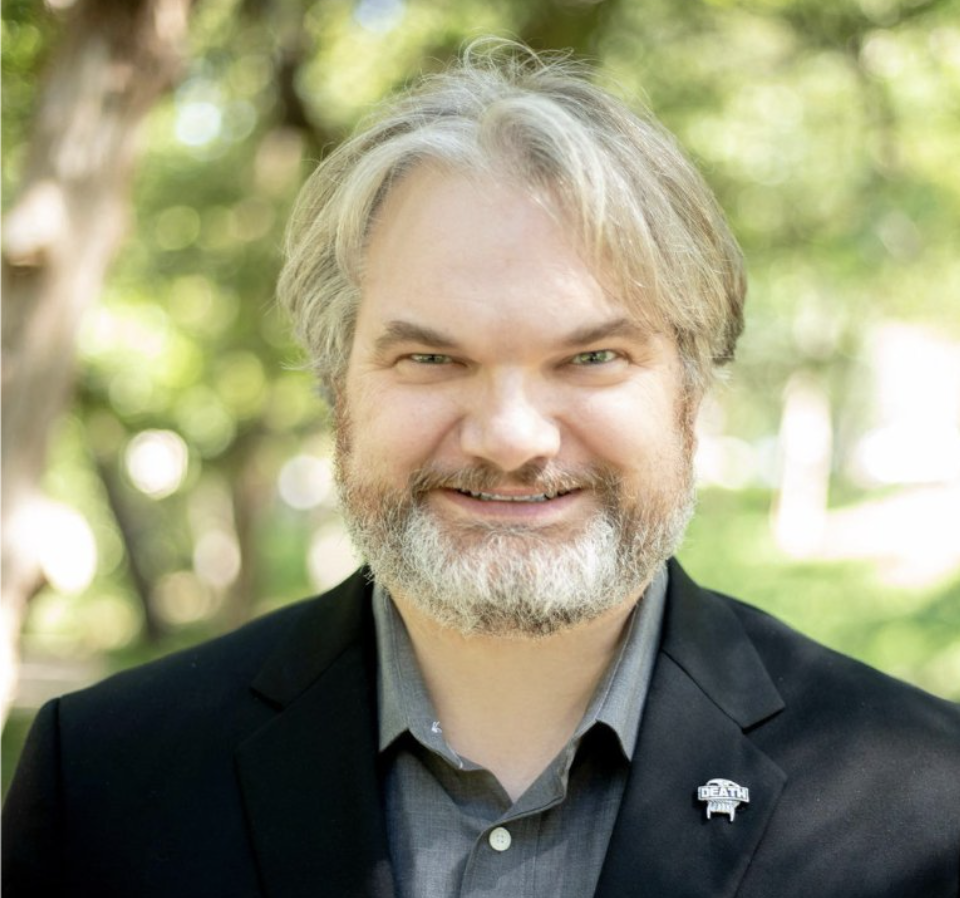
Bradley Tusk is a venture capitalist and political operative with deep ties to the Democratic Party. A former deputy governor of Illinois, he’s worked for U.S. Sen. Chuck Schumer (D-N.Y.), New York City Mayor Michael Bloomberg, and Andrew Yang.
He’s a prolific fundraiser for Democrats. Federal Election Commission data show he gave Democratic candidates almost $130,000 last year.
But he wasn’t a big fan of Joe Biden. Tusk told Politico it made no sense to give money to the Biden 2024 campaign because the donation wouldn’t have paid off. After Harris replaced Biden, Tusk vowed to donate $100,000. “There’s now a candidate who is viable,” he said.
It’s in this sense that Tusk’s long history with Uber co-founder Travis Kalanick – and his CloudKitchen venture – raises questions on his motives for supporting Harris.
Enter the Digital Restaurant Association (DRA).
The Digital Restaurant Association portrays itself as the voice of restaurants in the digital age. Its website argues that restaurants need to use digital tools to “build more loyalty” among new and existing customers along with increased revenue. It also promotes building “a sustainable delivery ecosystem and control the customer experience.”
It’s got deep ties to Tusk-owned Tusk Strategies and Kalanick’s City Storage Systems (CSS).
Senior CSS executive Guido Gabrielli was briefly listed as a director on the Digital Restaurant Association board. Gabrielle, who runs the Otter delivery operations platform, was removed from the board after the Financial Times asked about the relationship.
The association’s headquarters has the same Chicago address as Tusk Strategies. A Tusk Holdings executive vice president sits on the association’s board of directors.
More importantly, Tusk Strategies is the association’s registered lobbyist in Los Angeles. Its work includes supporting an ordinance that would force apps like DoorDash and Grubhub to release their user data from deliveries to local restaurants.
Who’s waiting to scoop up that data? CloudKitchens and the DRA.
A similar ordinance in Miami-Dade County failed. The Greater Miami Chamber of Commerce called it “incompatible with the basic principles of a free market.” Other critics expressed privacy concerns and potential misuse of customer data.
The customer data collection ordinance likely would have benefited CSS. The Financial Times reported CSS could have sold the restaurant data to advertisers for a big windfall.
That could help CSS-owned CloudKitchens survive.
CloudKitchens is a ghost kitchen that partners with chain restaurants to share costs by renting out kitchen space. Originally founded in 2015 by Diego Berdakin and Sky Dayton, it was taken over by Kalanick three years later.
Its reputation has taken a major beating over the past few years.
Despite appearing to feature small, locally-owned restaurants on its website, CloudKitchens faces accusations that it hindered local businesses. A Chicago restaurant owner said the ghost kitchen worked with national chains more than smaller restaurants. Residents also complained to the Chicago Sun-Times in 2021 that dozens of CloudKitchens drivers sped through their neighborhood and snarled traffic.
It’s also been accused of lying to food delivery app users. A class-action lawsuit filed last year said CloudKitchens-linked brands used the addresses of poorly rated brick-and-motor restaurants despite claiming they were based elsewhere. That included a deli that was actually a Subway.
CloudKitchens was also accused of poor quality control with items not matching the description listed on apps. “Defendant does this behind the backs of consumers, who are misled into believing that their orders come from regular restaurants whose online menus match their physical presence,” lawyers said.
And most recently, the owner of a Minnesota mall sued the company for not holding up the terms of its lease by operating ghost kitchens instead of creating a vibrant restaurant space.
Business issues have caused CloudKitchens to conduct two rounds of global layoffs in the past year. It also lost its chief financial officer in January.
Regardless of its struggles as a business, the public policy concerns surrounding Kalanick, Tusk, and the Harris campaign remain. Tusk has made it clear he views politics as transactional, which is why he says he withheld money from the Biden campaign. Now, Tusk has pledged to support Harris, who is touting her middle-class roots and offering her vision for an “opportunity economy.”
But if CloudKitchens and the DRA succeed in accessing local restaurants’ customer data, whose “opportunity” will it be?