
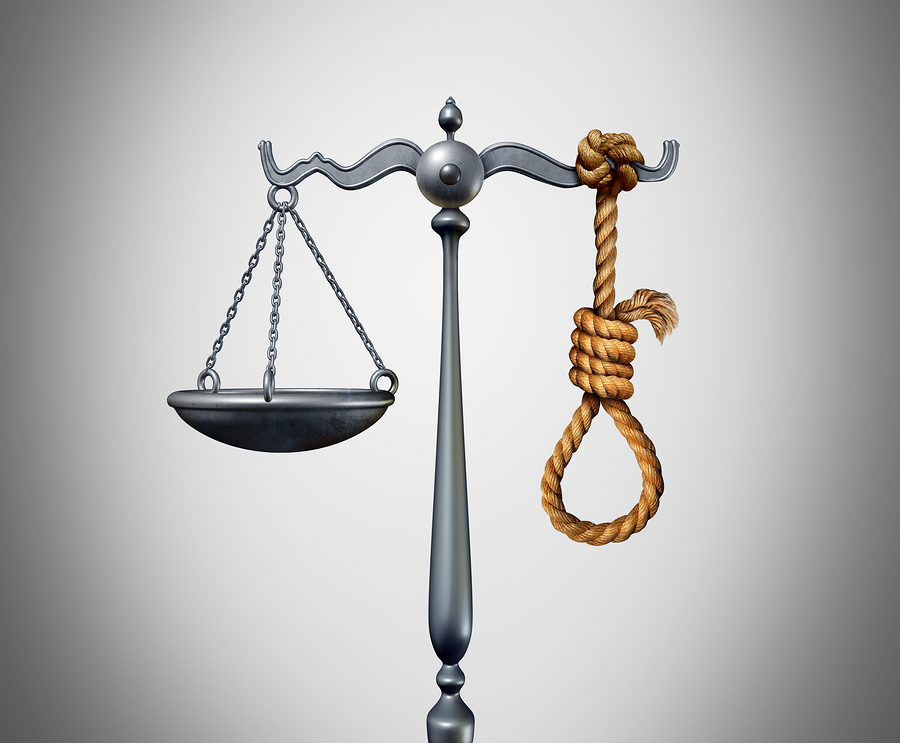
October 10 came and went as this country observed Indigenous Peoples Day.
For much of the world though, it was remembered and celebrated as the 20th anniversary of World Day to Abolish the Death Penalty.
Most Americans, other than those in the anti-death penalty community, were and remain unaware of that date. Efforts to end the death penalty were not helped by the media’s neglect. Here in Texas, there were very few articles even referring to the global effort to end the scourge of the death penalty.
Only five days earlier, on Oct. 5, Texas carried out its third execution of the year. Two more are scheduled in November.
On June 29, 1972, the U.S. Supreme Court halted national executions with the Furman vs. Georgia decision. The moratorium would remain in place for almost four and one-half years. During America’s bicentennial celebration, the court ruled on July 2, 1976, in Gregg vs. Georgia, that executions could resume, albeit under more narrowly defined capital sentencing requirements.
Gary Gilmore, an inmate on death row in Utah, voluntarily gave up his remaining appeals and became the first condemned individual to be put to death in the U.S. in the modern era when he was shot to death on Jan. 17, 1977, by a firing squad inside the Utah State Penitentiary.
No one was executed in 1978, but executions gradually became more common and hit double digits in 1984 when there were 21 nationwide. Executions peaked in 1999 at 98. Despite the annual decline in executions since then, the U.S. has still conducted double-digit executions annually, including 11 last year and 11 thus far this 2022, with 9 more scheduled before the end of the year.
Perhaps not surprisingly, California, Florida, and Texas — the three most populous states — have the leading death row populations, with 687, 305, and 195 respectively. Nationally, almost 2,400 people are condemned to death, waiting for execution in 27 states, as well as at Fort Leavenworth, Kan., site of the military death row facility, and in Terre Haute, Ind., where over 40 men are waiting under a federal sentence of death.
Most of those currently condemned have much in common: They are men, overwhelmingly poor with little formal education, and are afflicted with serious (and sometimes profound) mental health issues. And most are guilty of the heinous crimes for which they are charged and convicted. They are responsible collectively for a great deal of anger, hurt, pain, and loss that runs rampant in our society.
It is estimated that up to 15 percent of those waiting to die in this country are innocent of the crimes for which they have been convicted. That translates to over 350 innocent people who are waiting to be killed. Over 180 innocent people have already been freed from various state death rows.
Since Gilmore’s execution 45 years ago, the nation has executed 1,551 people, including a whopping 576 condemned men and women in Texas. That figure makes the state not only the leading execution jurisdiction in this country but the leading killing jurisdiction in the entire free world.
The U.S. has more methods of execution than any country in the world. We kill the condemned with electric chairs, firing squads, gas chambers, hanging, and lethal injection. Some states (Alabama and Oklahoma in particular) have recently tried (unsuccessfully) to enact killing condemned inmates via nitrogen hypoxia, a method of suffocating a person by forcing them to breathe pure nitrogen, starving them of oxygen until they die.
According to the human rights organization Amnesty International, there were 579 executions in 18 countries last year, a 20 percent increase from the year before, and 2,052 death sentences, a 40 percent increase from 2020.
Over 80 percent of global executions occur in a handful of countries, including Egypt, Iran, and Saudi Arabia. (China is the annual leader in global executions but is never included in those statistics since the country does not openly report such events).
The four primary methods of execution in the world last year were beheading, hanging, lethal injection, and shooting.
However, the global campaign and trends to abolish the death penalty have been more successful in the 40-year span of 1982-2022. An average of four countries a year continue to abolish the death penalty for all crimes so that over two-thirds of the countries in the world no longer carry out executions in the name of the law.
The struggle to help end one of America’s longest-running institutions will go on. I would argue that no country, and certainly not our own, can ever be “good” on its overall human rights record so long as it continues to be wedded to the preposterous idea and practice that some people “deserve” to be killed in the name of the law. Society has a right to be protected from its violent transgressors, but exacting the death penalty upon felons who commit such outrages against society is an inhumane solution.
Is executing a small number of individuals, with the above-named methods, the best response to violent crime this country can muster? If so, why is this the best we can do?
If executing people is not the best response our country can produce, then why are we doing it?
Why do we cling to a system riddled with mistakes, that is systemically racist, ineffective, and incapable of solving the larger issues of violent crime in this country?
We need more human rights education in general, and about the merits of the death penalty in particular. We must get beyond the raw and painful emotional responses to violent offenders and seek to enact meaningful solutions that can produce a better and safer society.
Perhaps by Oct. 10, 2023, when we commemorate World Day to Abolish the Death Penalty again, this country will be more advanced in its efforts to end these barbarous execution methods and practices, and closer to the fulfillment of the essential truth of human rights, namely: there is no such thing as a lesser person.