
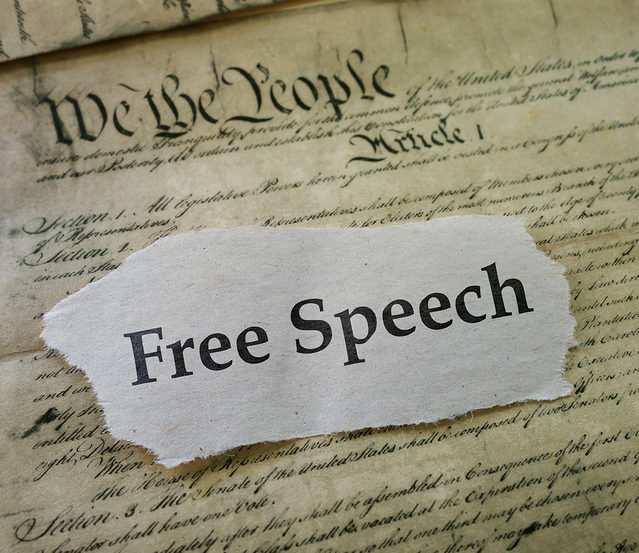
As America commences its 250th anniversary with this year, free speech and press freedoms face unprecedented threats from campus censorship, social media content moderation, and government pressure campaigns. The First Amendment’s free speech and free press foundations are under multiple threats in ways the Founders never imagined.
Respected survey results released late in 2025 underscore these concerns. For example, the quarterly National Speech Index, conducted by the nonpartisan Foundation for Individual Rights and Expression, tracks changing attitudes toward free speech among the American public. It asked respondents, “When it comes to whether people are able to freely express their views, do you think things in America are heading in the RIGHT or WRONG direction?”
Dramatically, 74 percent of Americans in the October edition of the NSI responded that things are headed in the wrong direction for free speech, compared to only 26 percent who think things are headed in the right direction. It noted, “This represents a 10-point jump since the previous July survey. Notably, drops in confidence across all political parties contributed to the record levels of pessimism.”
The Freedom Forum’s 2025 “Where America Stands” survey, however, shows that Americans support the First Amendment by more than 90 percent. They also demonstrate high awareness in areas involving free speech, but some of that awareness and support is ebbing, especially in younger citizens’ attitudes toward freedom of the press.
While First Amendment support is rooted in high awareness, that survey also found Americans are fearful of speaking out. Among the 65 percent of survey respondents who indicated they are fearful, they most often cited the threat of a violent response and the fear of creating tension with friends and family.
Viewed broadly in light of this data, the nation must focus on how to support the cherished values of free expression that extend beyond the First Amendment, which serves only as a barrier for government intervention in viewpoint discrimination or how the news is reported.
The First Amendment is a legal construct enforced by courts, but free speech and press freedom are cultural values that extend well beyond constitutional law.
Much of what people call “wokeness” or “cancel culture” is not First Amendment issues — they’re broader cultural questions about free expression. The truth is, we really don’t have a robust culture of free expression in this country. How do we make people more sensitive to these issues and more respectful of the First Amendment?
Cultural changes don’t require government action. We can do it ourselves. Just as there was a successful 50-year campaign to promote Second Amendment rights that reshaped American values, we need the same dedicated effort for the First Amendment.
Attacks on the First Amendment come from the left and right. Both sides want censorship in different ways. Both fundamentally lack a cultural understanding of free speech and press freedom as bedrock American values.
Real cultural change takes time — sometimes a generation or more. It’s important to start now, at the outset of America 250, to begin developing practical steps in that direction.