
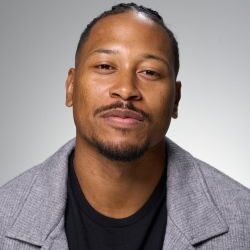
When I think about where my real relationship with hope began, it was when I started hoping my father would come home. He was incarcerated when I was 2 years old. At first, my mother told me he was on vacation — afraid to expose her little Black boy to the harshness of the world. When we started visiting him in prison, it became clear that those white walls, heavy mechanical doors and watchful guards were no vacation.
I still remember what it felt like to be picked up by my father. To feel his warmth. To get one of those big kisses on my head as he called me Boo. I remember wishing that moment would never end — hoping he could come home so those feelings could be part of my everyday life.
When we got home, my mother — at no fault of her own — wanted to make sure I saw a light at the end of the tunnel. She wanted me to hold onto hope. He didn’t come home until I was 26.
That’s a long time to be hopeful.
As those years wore on my spirit, I stopped letting myself get too excited about what wasn’t right in front of me. Even now, I find it hard to feel joy about the future until it’s happening. It’s like my mind doesn’t allow me to believe in what’s coming until I can touch it.
I also know that for many people — especially those who’ve endured generations of violence and loss — hope has been a kind of survival. Sometimes the only thing that kept our people alive was the belief that there would be another morning. I don’t reject that kind of hope. For me, the hope that asks me to wait feels too close to surrender. The hope I trust lives in motion, in the doing.
The second thing that shaped my perspective on hope was my experience with Christianity and faith. Maybe a lesser-known fact about me is that I grew up in a Christian home. I went to a private Christian high school and, for most of my youth, I would’ve considered myself a pretty religious person. That’s changed over the years as I’ve tried to distance myself from the White Christian nationalist project that dominates much of religion in the United States. Still, my relationship with faith, like for many people, is complicated. I’ve seen the great harm it’s caused — both systemically and interpersonally — but I’ve also seen the good, and I’ve been shaped by that good.
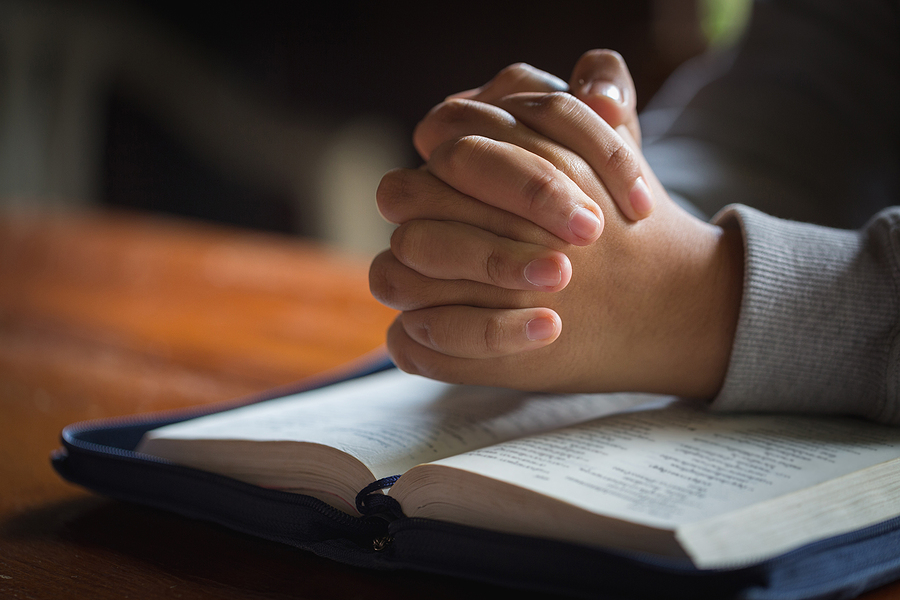
From my perspective, Christianity, like many religions, places a heavy emphasis on having faith — believing that “God’s will shall be done.” There’s the promise of a better future, the reward of salvation, the idea that long suffering in this world will be paid back in the next. You’re taught to put your faith and hope in God, to trust that He will protect you and deliver you in time.
Those parts of the Bible never really resonated. What stayed with me were the stories of people who didn’t just pray and wait for salvation to come — they worked to make it real. They lived principled lives and fought to improve the conditions of those who suffered. No one embodied that more than Jesus himself. He spent his time with the most marginalized people, fed the hungry, healed the sick, and challenged the powers that oppressed them. I never saw those stories as an invitation to sit and wait for blessings. I saw them as a call to action — to go out and do the work myself.
When I was in my early 20s, I took the little money I had and started finding ways to serve others — feeding the homeless, giving away my clothes, and having open conversations with others in these vulnerable spaces. Those days made me realize that my faith wasn’t just about belief; it was about practice. That “loving your neighbor” means acting in the world, prayer has to be met with action, and that, as the Bible teaches us, faith without works is dead.
The United States — and the world — is going through major economic, political and social restructuring. The violence that this country has long exported is now turning inward: violent migration raids, economic insecurity, National Guard deployments, and what feels like an accelerating turn toward fascism. As bad as things are, the conditions for those who came before us were unimaginably worse.
Across history, there have always been believers — from the Black church to liberation theologians worldwide — who understood faith as a struggle, not a submission. They preached that to love God was to fight for the poor, to free the captive, to challenge the empire. That’s the faith that still makes sense to me — one grounded in action, not abstraction.
For my formerly enslaved ancestors, I imagine hope was forged in the act of breaking a chain, whispering a plan, stealing away in the night, teaching a child to read, or holding fast to each other through centuries of terror. Each act of resistance, no matter how small, was both defiance and faith in motion.
In my life, I’ve realized that there are no “sure things.” No one can be born into a certifiably perfect family; having a great education or growing up in different neighborhoods doesn’t mean you won’t have moments in your life that make you question your purpose and place in the world. The most beautiful thing about hope is that, like waiting for spring on the heels of a tough winter, it eventually blooms into something beautiful and sustainable that we can take forward to the next seasons of our lives.
Hope and faith are what help us build toward our future. It ebbs and flows, but our moral calling to keep fighting for our families, our communities and ourselves is what keeps us steady. And whether you’re feeling hopeful or not, you still have a responsibility to keep fighting.