

“Shut up, Chicken Little. I have heard it all before. Nothing bad ever happens. The sky is not going to fall.”
That is the reaction I often hear when I raise concerns about America’s fiscal future. Many people cannot imagine that the United States could face a genuine financial reckoning. They assume that because it has never happened before, it will never happen. We are the wealthiest and most powerful nation on Earth, and people believe that such a nation cannot fail.
We are not too big to fail. We are too big to save.
The question is whether I am Chicken Little or Cassandra. Cassandra, in Greek mythology, was gifted with the ability to see the future clearly, yet was cursed in that no one would believe her warnings. Greece in the early 2000s offers a modern parallel. There were many warnings of financial collapse, yet few took them seriously. In 2008, Greece failed, forced to rely on emergency support to survive.
I see the world as it is rather than as I prefer it to be, and the facts about our fiscal condition are not hidden from anyone willing to look. We are failing!
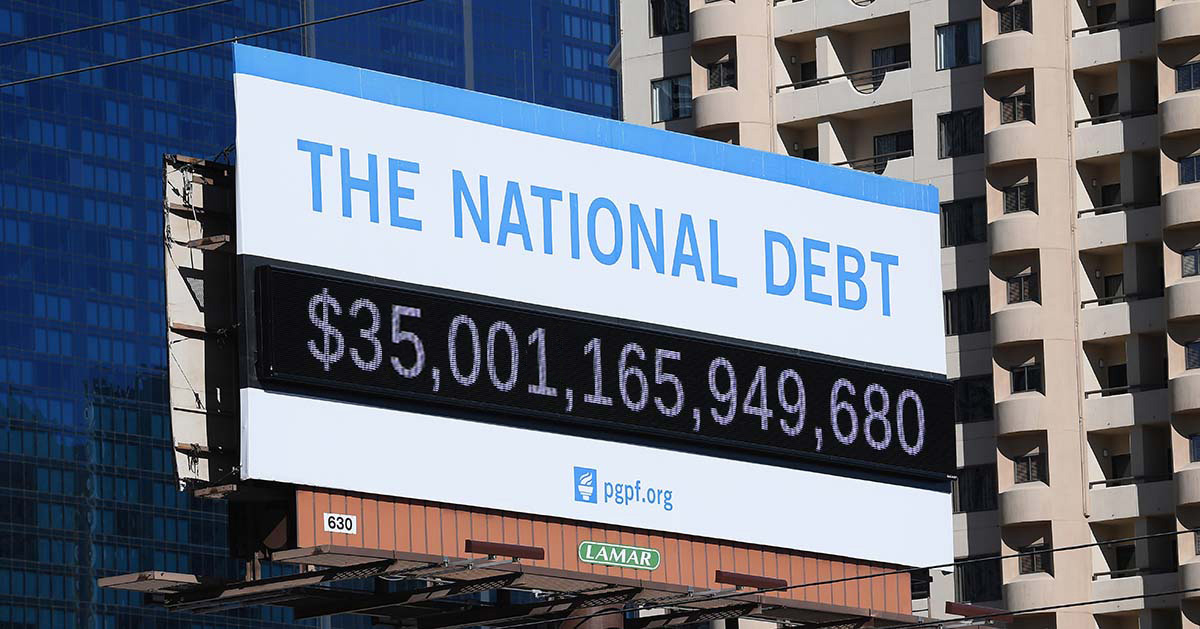
Our interest-bearing national debt has already surged past $38 trillion. Unfunded obligations exceed $100 trillion. The debt equals 125 percent of the nation’s gross domestic product. Projections show the debt rising toward $70 trillion within a decade. The federal government continues to run multi-trillion-dollar deficits with no apparent end in sight.
We have had heavy debt before and prospered, so why is today different? They point to the period after World War II, when debt exceeded 100 percent of GDP. What they overlook is the difference between then and now. After the war, debt resulted from a single, extraordinary national effort. Once peace returned, the country reduced spending, restored more balanced budgets, and adopted policies that encouraged strong economic growth. Over the next generation, the debt burden shrank to manageable levels, less than 40 percent.
Today’s debt is not a result of a single event. It is the accumulation of decades of political decisions in which both parties have promised voters more than the government could afford. Politicians have treated the public treasury like a limitless source for electoral advantage, offering new benefits, expanding old ones, and assuming future leaders would find a way to pay for it all. The result is a permanent and structural deficit that grows regardless of the state of the economy.
More than 250 years ago, Scottish historian and judge Alexander Tytler described a pattern that mirrors what is happening today. He wrote that a democracy cannot remain permanent once voters discover they can vote themselves benefits from the public treasury. According to Tytler, the majority will always support the candidates who promise the most benefits, leading to loose fiscal policy and, ultimately, a fiscal failure and a dictatorship. It is difficult to read Tytler’s words without recognizing the very dynamic now unfolding in our own politics.
Voters have become accustomed to demanding more, and elected leaders have become accustomed to providing it. Each election cycle produces a new set of promises that exceed the nation’s means. The consequences accumulate quietly, year after year, until the burden becomes impossible to ignore. That is the moment we are approaching now. Our debt is growing more rapidly than our economy. Even the federal government’s own long-term projections acknowledge that this path cannot be sustained.
This is not merely a policy concern. It is a moral one.
How dare we give our kids, grandkids and future generations a bankrupt country? We inherited one that works. It is unconscionable and immoral for us to give our heirs a country with insurmountable debts and no means to pay them. That is a recipe for bankruptcy and a country in financial distress that we will no longer recognize. Our representatives have sacrificed fiscal responsibility on the altar of political expedience. And we citizens have supported that.
Citizens must recognize that the responsibility now falls to them. Understanding the economics of our dire situation is the first step. Then we must understand and support policies to fix the problem, knowing that it will require fiscal discipline and the sacrifice of some benefits we cannot afford. Then we must speak out and insist on fiscal responsibility from our elected representatives.
Only an informed and motivated public can redirect the nation toward a sustainable course. It is up to citizens to save this country.