

It helps fund terrorist organizations like Hezbollah and Hamas. One of the terrorists responsible for the deadly Charlie Hebdo attack in Paris used it to pay for his weapons. It’s part of the same network of narco-criminals bringing deadly fentanyl into the United States.
And it’s happening in your community — perhaps right in your office or on your laptop.
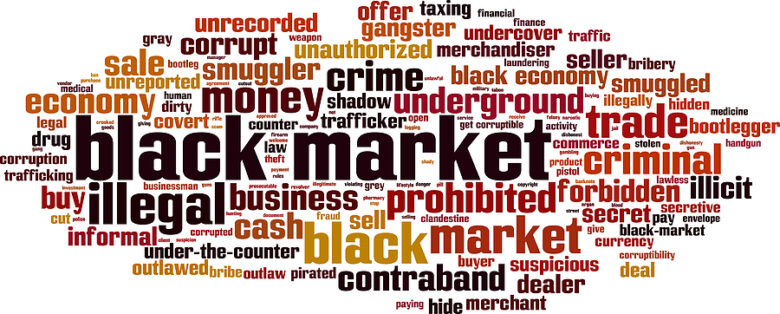
It’s the growing market for illicit goods, which ranges from counterfeit products to intellectual property (IP) theft to consumer products stolen through organized retail crime.
American businesses lose an estimated $225 billion to $600 billion each year to IP theft. Counterfeit markets span everything from illegally copied movies, music and software to knockoff clothing and handbags — and even counterfeit pharmaceuticals.
While Hollywood often portrays counterfeiters as members of sprawling international criminal organizations, in reality, most groups are far smaller. Just last month, U.S. Customs and Border Protection officers in Virginia seized more than $775,000 in counterfeit children’s toys shipped from China.
At the same time, the involvement of criminal networks has turned shoplifting from a commercial nuisance into a growing danger.
The National Retail Federation reported that more than 73 percent of retailers say shoplifters are exhibiting more violence and aggression than the previous year, putting employees and customers at risk.
“There’s a tremendous amount of violence involved in organized retail crime and the actual theft at stores. Unfortunately, we see retailers getting hurt, along with innocent bystanders and law enforcement,” said Raul O. Aguilar, who ran Homeland Security Investigations’ Operation Boiling Point, which targeted large-scale theft rings.
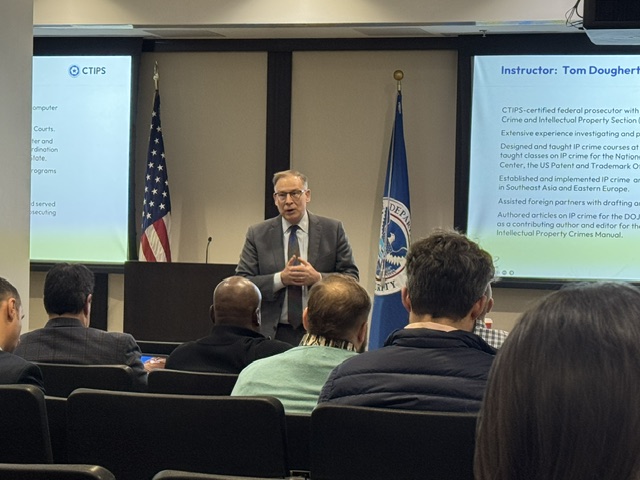
In response, law enforcement and the private sector are teaming up. Using a curriculum developed in conjunction with the Center for Anti-Counterfeiting and Product Protection at Michigan State University, local authorities, law firms and tech experts can get certified through the Certified Trade and Intellectual Property Specialist Program, or CTIPS.
During a recent Washington, D.C., training session, Steven Oxman with CTIPS said the threat from bogus goods puts legitimate corporations in a tough spot. “They don’t want people to know that there’s a counterfeit thing out there, right?” he told InsideSources.
Oxman said that because China is a global leader in toy and electronics manufacturing, a large share of counterfeit goods also comes from China. He said Beijing has stepped up its efforts to slow illicit trade but added that it can still do more.
At the same time, Oxman said, American businesses need to ramp up protections for their valuable intellectual property, particularly given the Trump administration’s focus on international trade and tariff negotiations.
But getting law enforcement involved in counterfeiting operations can take time. The U.S. Justice Department is not required to launch a counterfeiting investigation. The process can be even slower in other countries because of the volume of complaints.
That doesn’t mean businesses can’t collect evidence to assist law enforcement. Often, private-sector efforts such as United to Safeguard America from Illegal Trade are the first line of defense in identifying fake products and illicit trade.
The CTIPS training encourages executives to monitor market trends involving their products and to listen to customer complaints if inferior-quality goods flood the market. Companies can also use “secret shopping” to verify suspicious activity on internet marketplaces and social media apps such as Discord, Oxman said.
Another strategy: Businesses and trademark holders can wait before sending cease-and-desist letters to suspected counterfeiters, allowing law enforcement to begin building a case. Executives were warned that these letters can tip off suspects that police are on their trail. They were told it might be better to send the letter after a criminal investigation has begun.
Oxman said the training is important because the illicit economy touches so many areas, and the challenges it creates are legally complex.
“The ability for the various agencies to learn from each other is extremely important, because there are so few people who know all parts and possibilities of this particular area,” Oxman said.