

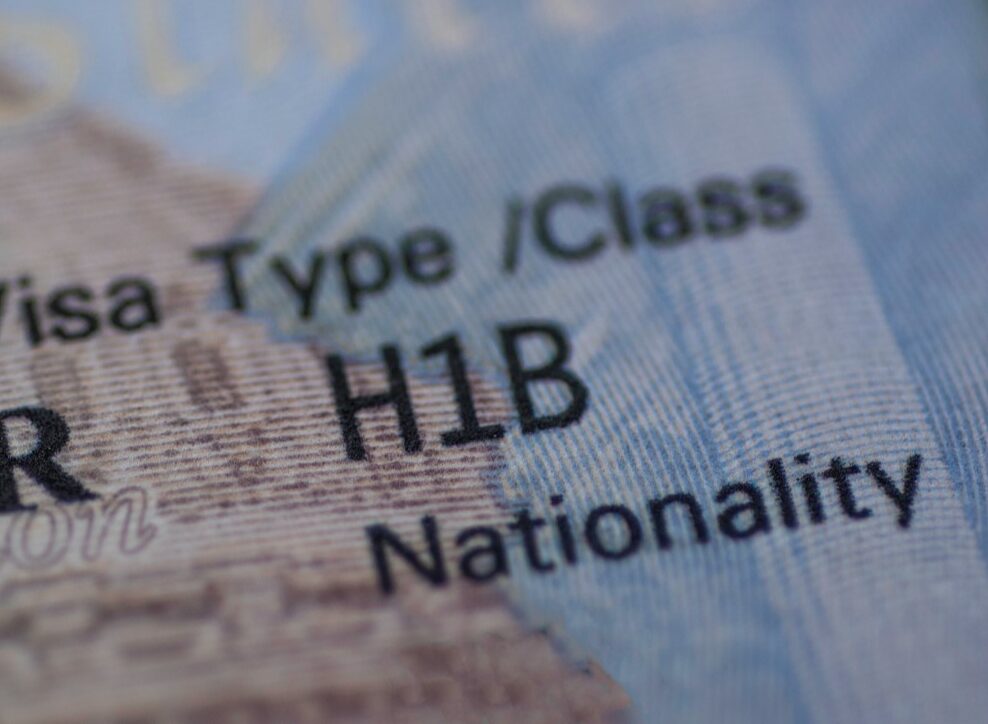
The Department of Labor announced in September a long-overdue enforcement initiative — Project Firewall — that aims to strengthen enforcement of the nation’s controversial H-1B program, which allows employers to employ temporarily foreign workers in “specialty occupations” that require at least a bachelor’s degree or equivalent.
What is the focus of Project Firewall enforcement initiatives under existing laws or statutory authority?
First, the Labor Department is certifying that each employer investigation where there is “reasonable cause” to believe an H-1B employer has a compliance issue.
Second, those employers found in violation of the H-1B program may face back pay liability, civil financial penalties, and/or debarment from future access to the H-1B program.
Third, Labor will coordinate with the Department of Justice, Civil Rights Division, the Equal Employment Opportunity Commission, and U.S. Citizenship and Immigration Services to share information and refer cases for criminal enforcement action.
Project Firewall signals a more aggressive enforcement posture, increasing the likelihood of employer audits and site visits.
In November, Labor announced it had initiated at least 175 investigations of potential abuses (which account for $15 million in calculated back wages for workers) within the H-1B visa program. As part of its effort to protect American workers by prioritizing qualified Americans for employment positions and ensuring that only necessary foreign workers are employed in the United States, this initiative also protects H-1B foreign employees against wage and employment abuses by employers.
According to a December 2021 report by the Economic Policy Institute, researchers found that skilled H-1B visa employees working as subcontractors at companies such as Disney, FedEx, Google and others appeared to have been underpaid by at least $95 million.
These investigations have uncovered myriad concerns about the program. For example, these investigations (firm names are kept anonymous because investigations are continuing) have found that some H-1B workers are paid much less than what is promoted in the job description, which in turn, depresses wages for visa-holders and American workers, while also forcing American employees with the same qualification to accept lower wages in order to stay competitive.
In other investigations, employers did not notify the Citizenship and Immigration Services when an H-1B visa holder was terminated, or found significant lag times between a termination and an employer informing the agency that oversees the immigration system. Investigators also found that work sites listed on Labor Condition Applications documents did not exist, or that workers were unaware of the jobs they were supposedly assigned to perform as outlined in the applications.
Other investigations found that some employees engaged in “benching,” which is when H-1B visa holders are not paid when they are between active work projects. There is also the possibility that this historical employment data being reviewed may potentially expose employers to Justice Department investigations related to their diversity, equity and inclusion initiatives.
Along with Project Firewall, President Trump signed a proclamation introducing a $100,000 one-time fee for each H1-B application in the next annual lottery, the H-1B system that the U.S. government uses once the annual H-1B visa cap is reached. This proclamation is designed to encourage tech employers to offer higher salaries or reserve H1-B petitions for jobs that require advanced technical skills.
According to Citizenship and Immigration Services data, from 2024 through mid-2025, Amazon obtained 19,301 H1-B visas, more than any other major tech company, while Microsoft secured 9,914 employees through the H1-B program, while Apple brought in 8,075 employees.
“The whole idea is no more will these Big Tech companies or other big companies train foreign workers. They have to pay the government $100,000, then they have to pay the employee, so it’s just not (economical),” said Commerce Secretary Howard Lutnick.
Although Trump has recently softened his criticisms of the H-1B visa program (“you don’t have certain talents and people have to learn”), this is not an indication that the administration’s efforts to enforce the regulations and statutes governing the program are being curtailed. While legal challenges are underway to prevent the implementation of the one-time $100,000 fee, the administration is not backing off on its intention to implement it in the next annual H-1B lottery.
The administration is apparently interested in “reforming” the H-1B program by enforcing employer compliance with statutory requirements and incentivizing the hiring of American workers, but has no intention of eliminating it.