
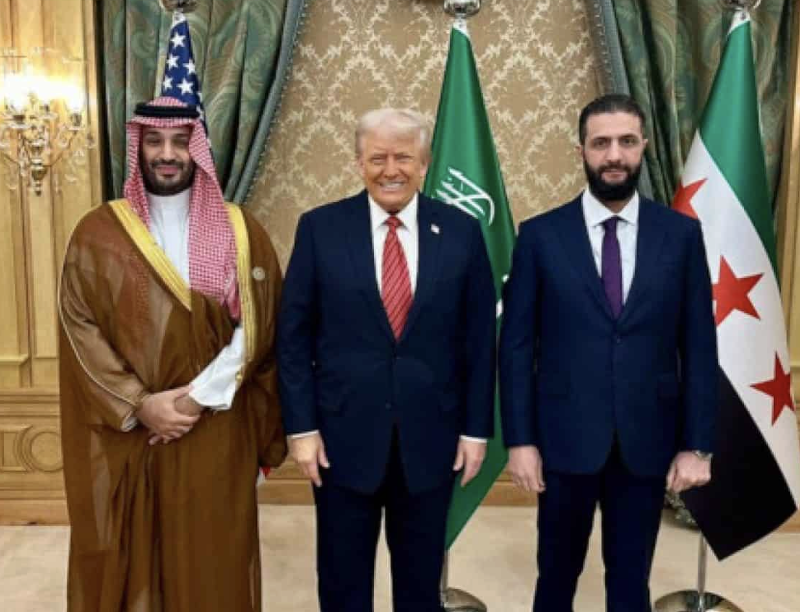
President Trump’s recent decision to lift sanctions on Syria — with crucial support from Saudi Arabia and Crown Prince Mohammed bin Salman — marked a historic shift. For the first time in four decades, American businesses can freely engage with Syrian markets. Now comes the critical question: Will American enterprise seize this opportunity, or will we watch from the sidelines as competitors fill the void?
The answer should be obvious. Syria represents one of the most compelling investment opportunities in today’s Middle East. American firms that move decisively stand to benefit enormously — not just financially, but strategically.
Syria’s transitional president, Ahmad al-Sharaa, has shown a clear commitment to rebuilding the country for peace and prosperity. His government is actively pursuing reconstruction and economic renewal — signaling a hopeful break from the past. That stands in sharp contrast to other regional leaders who have pursued violence at the expense of their citizens’ futures.
This shift unlocks vast untapped potential across Syria’s economy. The country holds modest but valuable oil and gas reserves and sits strategically at the crossroads of Europe, Asia and the Middle East — positioning it as a future logistics hub for regional trade.
Syria also boasts a young, highly literate workforce. Its universities — including Damascus University and the Higher Institute for Applied Sciences and Technology — have strong engineering traditions. Infrastructure across virtually every sector, from roads and bridges to power grids, telecom, hospitals and schools, needs rebuilding after more than a decade of civil war. That means opportunity for American construction firms, engineers, tech providers and manufacturers.
Yet the opportunity extends far beyond physical reconstruction. Syria’s location and human capital make it a prime platform for companies seeking to expand their presence in the broader Middle East. Early movers will gain durable competitive advantages in a market that remains largely untapped.
The strategic stakes are high. China is already moving in. In May, Beijing signed a new agreement with Syria’s General Authority for Land and Sea Ports. The deal gives a Chinese firm long-term rights to develop industrial zones and operate key infrastructure, including ports. This is more than commerce. It is a foothold in Syria’s economic future and a step toward broader regional influence. As China’s Belt and Road Initiative has shown, strategic infrastructure investment is a long game. Every day of U.S. inaction makes it harder to catch up.
That window of opportunity is narrowing. Gulf states, European firms and Asian corporations are already exploring Syrian partnerships. In fast-changing markets — especially post-conflict ones — first-mover advantages are real and enduring.
Thankfully, Saudi Arabia has made clear its willingness to partner with U.S. companies in Syria, viewing economic collaboration as a mutually beneficial pathway toward long-term stability and growth. To help catalyze and coordinate these efforts, a Saudi American Syrian Economic Forum is in development to support and facilitate investment and business partnerships across all three nations.
Any American investment, public or private, must come with clear expectations. Syria’s government must continue demonstrating progress toward inclusive democracy, respect for citizenship, and diplomatic engagement. This isn’t about imposing outside control or endorsing intervention. It’s about ensuring that partnerships are built on stability, accountability and mutual benefit — the foundations for long-term success.
The Trump sanctions reversal removed the primary barrier that once blocked American investment. There are no significant regulatory obstacles left. What’s needed now is business confidence and strategic initiative — not government aid but private-sector leadership driven by opportunity and return.
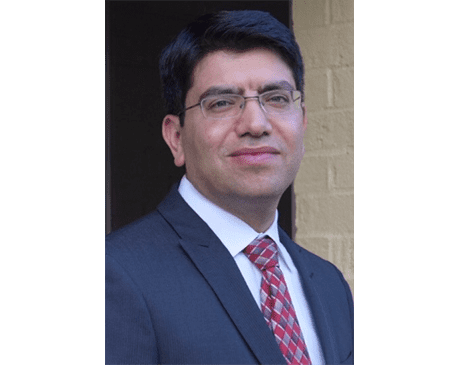
During a recent congressional delegation to Syria, I witnessed a country eager to rebuild and open to Western partnership. Syrian business and government leaders alike expressed deep interest in American technology, expertise and investment.
American foreign policy is most effective when it aligns economic opportunity with strategic interest. Supporting Syria’s recovery promotes regional stability, counters adversaries like Iran and Russia, and opens profitable markets for American enterprise.
The choice for American businesses is simple: lead or follow. Syria’s reconstruction will happen with or without us. The question is whether U.S. firms will help shape Syria’s future and share in the rewards, or let global competitors take the lead.
For companies willing to act decisively, Syria offers what every investor seeks: high-growth potential in an undervalued market with minimal competition. The sanctions are gone. The opportunity is real. The future is up for grabs.
Syria’s next chapter will be written by those bold enough to help build it.