
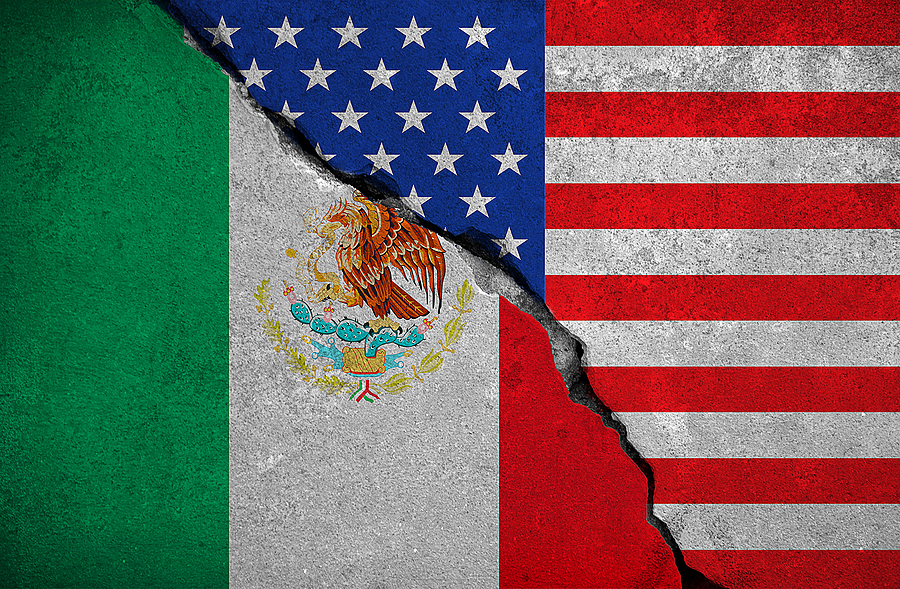
The U.S.-Mexico border has always been a politically charged flashpoint. For years, under Republican and Democratic administrations, both countries have felt the pressure of policies shaped by headlines and political commentary rather than common-sense solutions and results. This is especially true for those living and working in border communities.
Commerce is of singular importance to the region, notwithstanding the politics that affect it. The borderlands are plagued by nefarious activity, including drug trafficking, cartel violence and human smuggling. Too often, the 1,200-mile stretch between the two countries reflects the consequences of failed coordination, missed opportunities and general mistrust.
There is no denying that the United States’ southern border will persist as a central issue, especially as organized crime and drug cartels tighten their grip on legal and illegal markets. Studies from Mexico show these criminal groups are expanding their influence, threatening communities on both sides of the border, and undercutting legitimate economic and social development.
The questions remain: What specific actions can the United States and Mexico take to enhance cooperation in addressing crime along the border? How might the economic effects of bans on consumer goods be measured in regions affected by cartels? What role do local communities play in shaping policies that could help combat organized crime and improve border security? How can we learn to trust a government marked by generations of political corruption?
This growing threat demands more than U.S. enforcement. It requires a serious and consistent cooperative partnership with Mexico. The United States is collaborating with Mexico to address national security concerns.
Take fentanyl, for example, a drug wreaking havoc nationwide. The United States has taken aggressive steps to stem the flow of fentanyl, and the Mexican government, under President Claudia Sheinbaum Pardo, has shown it can be a valuable ally in this mission.
President Trump’s approach demonstrates that it can be effective. While unconventional — even among our allies and trading partners — Trump’s pressure campaigns have created a unique opportunity for Mexico to collaborate with the U.S. to pursue a shared national security agenda and a stronger border.
Yet, the partnership succeeds only if both countries commit to playing by the same rules, aligning enforcement priorities, economic objectives and public health strategies.
Unfortunately, prior actions by both countries risk undermining that cooperation. Mexico recently enacted a constitutional ban on e-cigarettes, prohibiting their import, sale, distribution and promotion. However, since Mexico’s tobacco industry is accessible to all its citizens, the ban allows cartels to step in and fill the consumer demand.
Criminal organizations thrive in the gaps left by inconsistent or reactionary policies, no matter which government orchestrates them. Bans on consumer goods do not eliminate demand; they shift the market to the dangerous underground, creating a $260 million black market controlled by organized crime groups. These groups fuel violence, extortion and unregulated product distribution, benefiting criminal networks.
When governments ban or artificially inflate the cost of products that people want, especially products seen as healthier or better choices for consumers, they create a vacuum that cartels are more than willing to exploit. These policies include medical goods and pharmaceuticals, firearms and, possibly, produce.
Without shared goals and mutual trust, we will not weaken the cartels; we will only strengthen them. A shared framework between the United States and Mexico that keeps dangerous items like fentanyl and illegally trafficked weapons out of circulation is unlikely to meet resistance. Success could establish a trusting relationship, leading to the implementation of common-sense policies for legitimate consumer goods and services.
As both countries shape their national security and border priorities, they must work toward practical policies. Reckless bans not only fail to stop criminal activity, but they also inadvertently empower it. That means rejecting short-sighted prohibitions in favor of coordinated regulation that promotes safety, public health, and legitimate cross-border trade.