
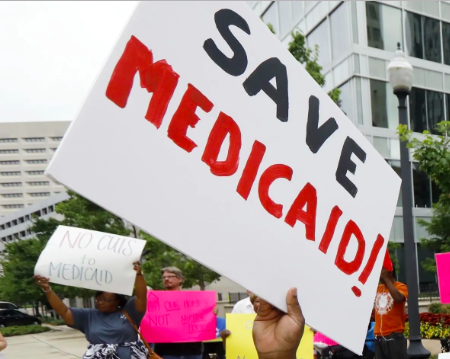
The House just passed a reconciliation bill that would slash Medicaid funding by $700 billion over the next decade. The Senate must make changes to the legislation to avoid dealing a severe blow to the hospitals that care for our country’s most vulnerable people.
Safety-net hospitals such as those run by the health system I lead, Stony Brook Medicine, are crucial components of the U.S. healthcare system. Despite making up only 5 percent of hospitals, we provide one-fourth of the care for America’s low-income and uninsured patients.
Many patients at safety-net hospitals lack the means to pay for their care. So, they often operate on razor-thin or even negative margins. In New York, payments from Medicaid cover just 70 percent of what hospitals spend caring for the program’s beneficiaries.
To sustain this vital work, Medicaid supplies disproportionate share hospital, or DSH, payments to public hospitals that treat a certain percentage of Medicaid and uninsured patients.
This system is a crucial lifeline for those in need. Stony Brook University Hospital, which cares for one in four Medicaid beneficiaries in Suffolk County, N.Y., is a case in point. Nearly 30 percent of our hospital discharges are Medicaid or uninsured patients. Seven in 10 involve some form of government payer.
Like most safety-net hospitals, we play a crucial role in helping people access care, even when they live in communities where many impediments interfere with their ability to obtain healthcare. One-fourth of our patients are non-White, nearly 16 percent identify as Hispanic, and 31 percent come from low-income backgrounds. Additionally, many elderly people are “dual-eligible,” meaning that they receive benefits from Medicare and Medicaid. This group accounts for 18 percent of all Medicare recipients.
Medicaid funding cuts would punish hospitals for serving vulnerable people and the people who rely on Medicaid to get treatment. Without the DSH payments the program provides, we would struggle to treat many of our patients and would be forced to scale back services, reduce staff and limit patient capacity.
Our plight is not unique. In fiscal year 2022, 5 percent of New York Medicaid spending was allocated for DSH payments. Four in 10 U.S. hospitals rely on such payments to support care for low-income and uninsured patients. Rural areas and small towns are primarily dependent on Medicaid coverage.
If the cuts under consideration in the House are implemented, many patients that safety-net hospitals serve would miss out on routine and preventive care and urgent inpatient treatment. That could result in dangerous complications and increase demand for emergency treatment.
Emergency rooms nationwide are already crowded. An extra burden of people whose care is better provided in non-emergency room settings would lead to worse outcomes for everyone who needs emergency care and raise overall costs. One study found that care delivered in an emergency room that could have been provided in an urgent care or primary care setting was 10 to 12 times more costly.
Depending on the size of the cuts to Medicaid, some safety-net hospitals could even be forced to close. That would leave countless patients without access to healthcare close to home.
Some activists and policymakers defend the proposed cuts by claiming Medicaid is rife with fraud and abuse. No one supports fraud in Medicaid. It is important to note that last year, just 5 percent of payments were considered “improper.”
More important, improper payments are not inherently fraudulent.
They include any payment that fails to meet statutory, regulatory or administrative requirements. That could mean that there was something as mundane as a problem with the paperwork. According to the Centers for Medicare and Medicaid Services, 80 percent of Medicaid’s 2024 improper payments were classified as such because of documentation errors.
There is no justification for slashing Medicaid funding. Doing so would kneecap the hospitals most dedicated to serving patients in need and devastate communities across the country that have come to depend on them for essential care.
New York’s congressional delegation is already pushing back against proposed Medicaid cuts. Lawmakers from other states must do the same. The damage that these cuts would do to safety-net hospitals nationwide — and the millions of Americans they serve — would be devastating.